
Arizona committee advances bill to regulate license‑plate readers after hours of testimony on privacy and public safety
Get AI-powered insights, summaries, and transcripts
Subscribe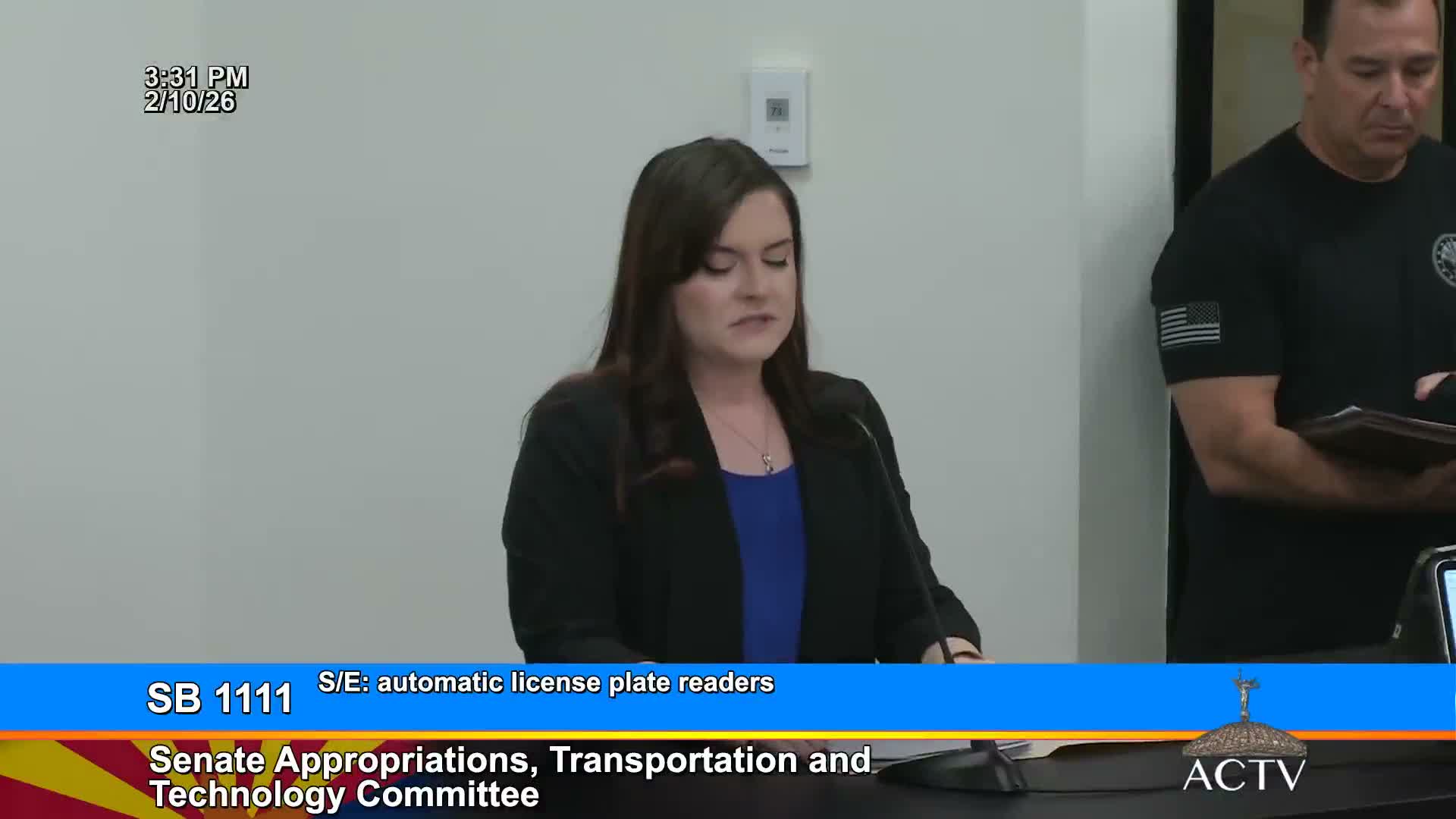
Summary
The Senate Appropriations Committee voted to advance SB 11-11, which establishes statewide rules for automated license plate readers (ALPRs), after extended testimony from law enforcement on public‑safety uses and privacy advocates calling for stricter retention limits and access controls.
The Arizona Senate Appropriations Committee on Feb. 5–6 advanced SB 11-11, a bill that would set statewide standards for automated license plate reader systems used by law enforcement.
Supporters, including Phoenix and Tempe police officials, told the committee ALPRs are valuable for investigations into homicide, missing persons and human trafficking and can speed recovery of stolen vehicles and victims. Sergeant and command witnesses said local systems are secured by password protections and multi‑factor authentication and that operators cross‑check ALPR hits against motor‑vehicle registration data before enforcement actions.
Opponents — including the ACLU of Arizona, the Institute for Justice and several privacy advocates — said the draft does not go far enough to prevent mass surveillance. They argued the bill lacks clear limits on how long historical plate data can be retained, sets no warrant requirement for searches of older records and fails to require meaningful audit standards or remedies for individuals whose records are inaccurate. The ACLU pressed for retention periods measured in minutes where possible; other witnesses pointed to real‑world cases where weeks or months of data were needed to locate missing people.
Senators focused much of the questioning on two tradeoffs: how long jurisdictions may keep ALPR data and who may lawfully access it. Witnesses offered a range of approaches — including a short 'use it or lose it' retention tied to active investigations, a warrant requirement to access historical location data, and limits on third‑party transfers — but did not reach a consensus during the hearing.
After stakeholder testimony and committee discussion, members adopted a strike‑everything amendment and voted to give SB 11-11 a due‑pass recommendation. The roll call reflected divided views about the balance between civil‑liberties protections and investigative utility.
The committee's action sends the bill — as amended — to the next stage of the legislative process; proponents and privacy groups said they expect further amendments and stakeholder work before final passage or enactment.