
Panel approves bill letting developers appeal ADWR deficiency letters; department warns of workload impacts
Get AI-powered insights, summaries, and transcripts
Subscribe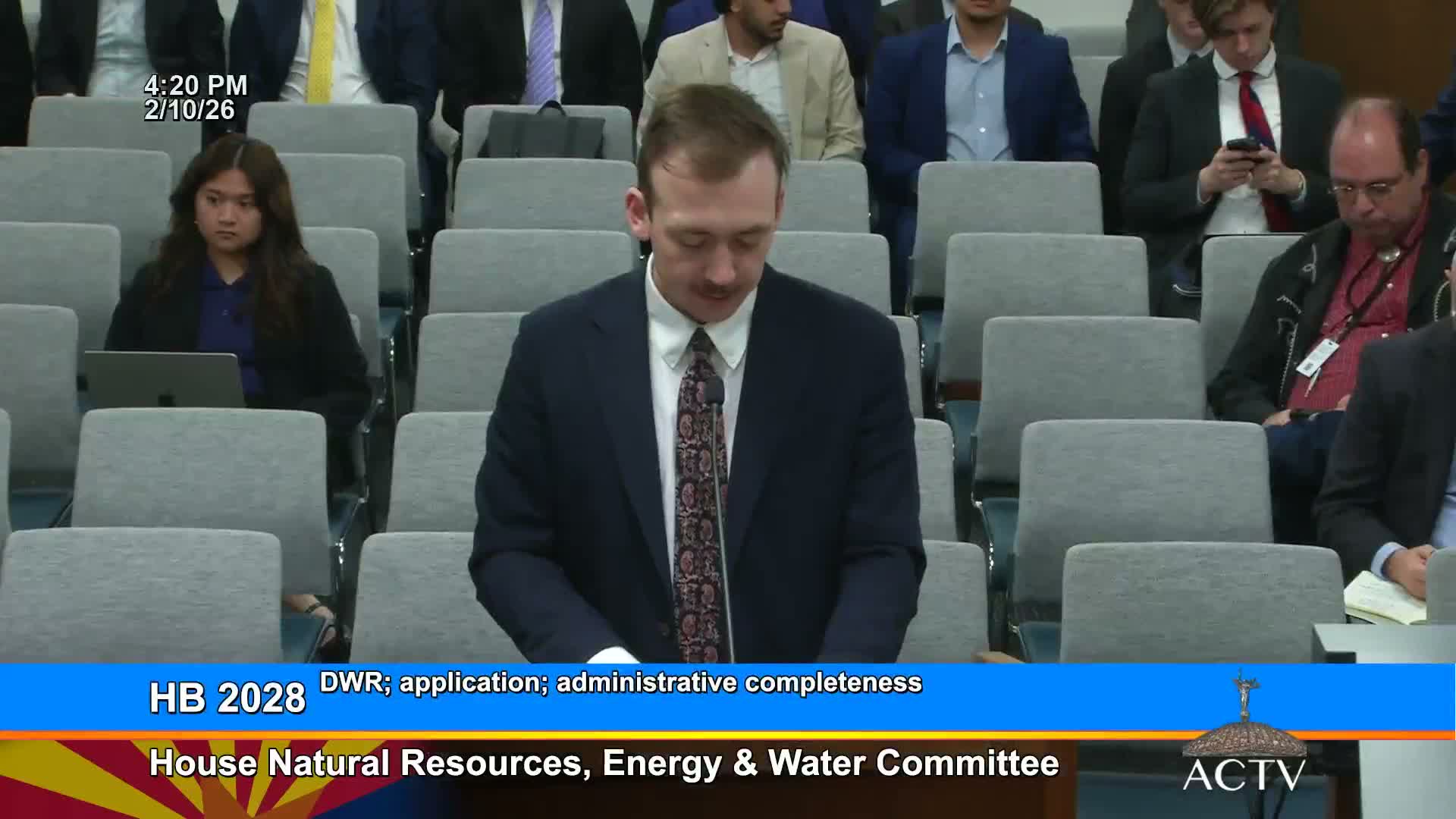
Summary
Lawmakers voted to make ADWR deficiency letters appealable to the Office of Administrative Hearings, restoring an appeal right for applicants but prompting concerns from ADWR about additional staff time, legal complexity and potential delays to water-supply approvals.
The committee approved House Bill 20 28, which removes ADWR’s current exemption that prevents administrative-deficiency letters from being appealed to the Office of Administrative Hearings.
ADWR witnesses said the change would turn deficiency letters — the department’s notices explaining administrative incompleteness — into appealable agency actions, requiring agency staff and attorneys to participate in formal OAH proceedings. David Fernandez of ADWR told the committee the measure “would be a significant increase of workload for our existing staff and for our existing attorneys.”
Fernandez also explained ADWR’s timeline for assured-water-supply applications: “The total time line is 210 days. That's 150 for the administrative completeness and 60 days for the substantive review.” Legislators and industry representatives pressed ADWR on whether such exhaustion of staff resources explains slow approvals and whether procedural adjustments could speed the process without creating new legal paths for appeals.
Supporters, including the Home Builders Association, said HB2028 restores parity: all other regulated applicants may appeal agency completeness determinations, and ADWR’s exemption is a statutory oddity. They argued the bill gives developers a legal path if they believe a deficiency letter is incorrect or unfair.
Committee action and implications: The bill passed with a 6-4 vote. ADWR said that if deficiency letters were appealable, agencies and applicants facing complex hydrological modeling and technical disputes would more often use formal hearings, increasing costs and administrative burden. Supporters said that if deficiencies are genuinely procedural or clerical, agency—applicant communications can continue to resolve the matter; the bill principally restores an appellate option.
Next steps: HB2028 proceeds to the House floor with a due-pass recommendation; lawmakers may consider amendments or budget implications related to ADWR staffing in later stages.