
House committee advances package of water bills after heated debate over Phoenix-area rule change
Get AI-powered insights, summaries, and transcripts
Subscribe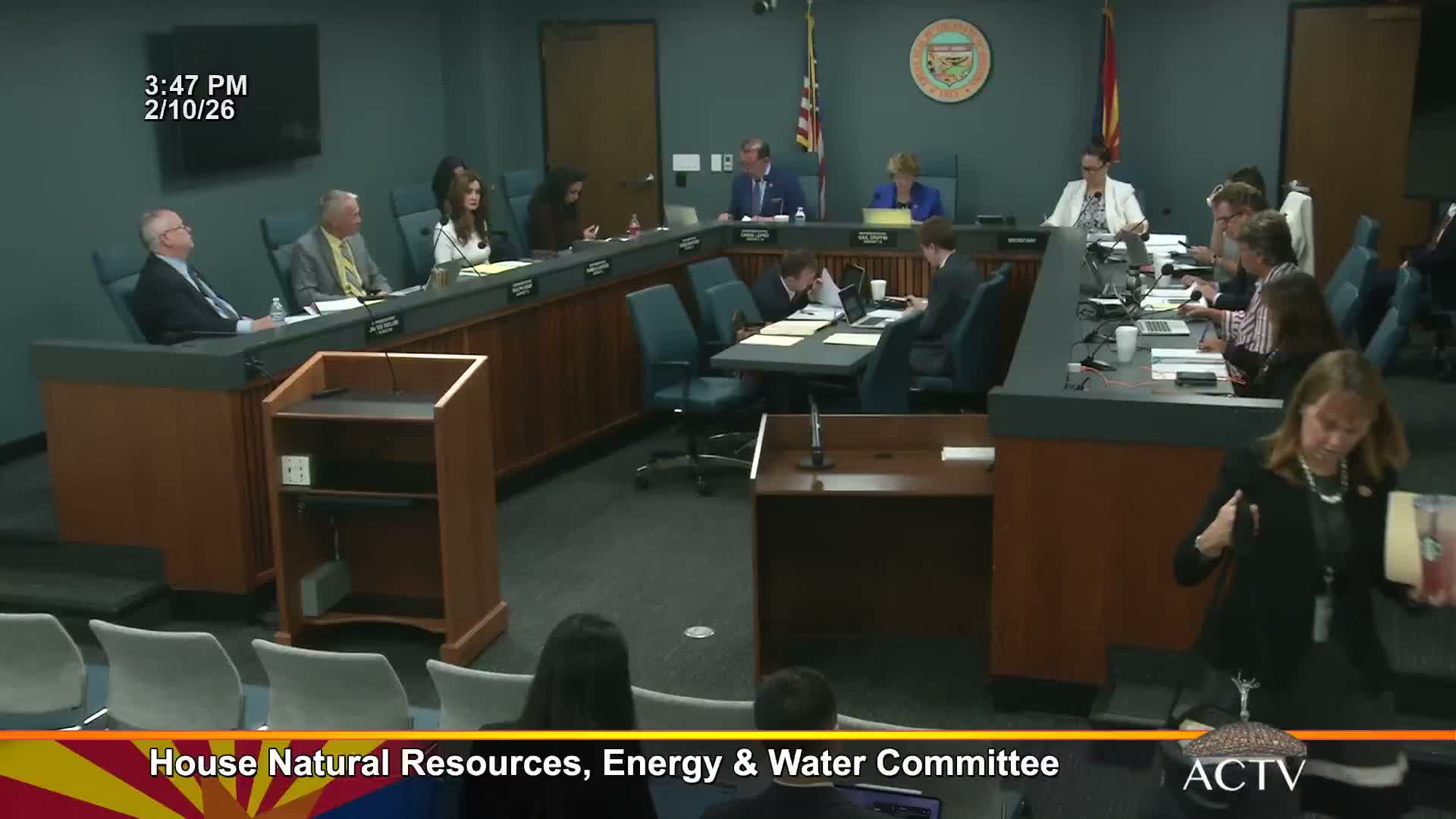
Summary
The House Committee on Natural Resources, Energy and Water advanced a broad set of water-related bills — including HB2026, HB2027 (as amended), HB2028 and HB2094 — after extended debate about whether changes weaken assurances that new developments have physically available groundwater. Opponents warned of supply and replenishment risks; supporters said reforms address unfair rules blocking housing and economic development.
A House committee on Thursday moved a slate of water bills forward after a night of often tense testimony over how Arizona certifies water for new development.
The bills include HB2026, which changes how the Arizona Department of Water Resources (ADWR) evaluates water availability; HB2027, which the panel amended and approved after a contentious exchange over whether the amendment would exempt certain cities and relax physical-availability reviews for applicants who enroll in the Central Arizona Groundwater Replenishment District (CAGRD); and HB2028, which removes ADWR’s exemption from appeal for deficiency letters. The committee also advanced HB2094 and HB2095, both of which modify technical criteria ADWR uses to issue assured-water-supply certificates.
Why it matters: Committee members and witnesses said the package touches the core of Arizona’s growth policy — how municipalities and developers prove there is water for new homes. Proponents argue the changes remove procedural hurdles and address inconsistent treatment of designated providers and certificate applicants. Opponents say the timing is poor amid Colorado River uncertainty and that some amendments could allow new development to proceed without adequate regional review of aquifer impacts.
Central Arizona Project (CAP) representative Jeff Gray told lawmakers the Griffin amendment to HB2027 effectively removes a “brake” that currently requires certificate applicants to document physical availability before enrolling in CAGRD. In committee comments he warned the amendment “waives the requirement for a certificate applicant in the Phoenix AMA to demonstrate physical availability if the applicant enrolls in the GRD,” a change CAP said could create unquantified enrollment and strain replenishment obligations.
ADWR officials said they shared procedural concerns. Department witness Trent Blomberg told the panel the Griffin amendment and related proposals would constrain the department’s ability to review groundwater availability and neighboring-well impacts: approving certificates without regional review, he said, “would require the department to approve new certificates and developments without being able to review whether that pumping would cause impacts to neighboring wells.”
Home builders and development groups pushed back. Spencer Camps of the Home Builders Association of Central Arizona said the process has become an asymmetry: certificate applicants face a high bar while designated providers get more flexibility. Camps called the bill a corrective step to address that imbalance and to reduce delays that have stalled housing projects.
Committee action and next steps: After amendment and debate, the committee adopted the Griffin amendment and then passed HB2027 as amended. HB2026 and HB2095 were also advanced after presentations and relatively short questioning. HB2028, which would make deficiency letters appealable to the Office of Administrative Hearings, passed after a separate debate about staffing and the judicialization of administrative processes. Each bill now moves to the next legislative step for further floor consideration.
What supporters and opponents said (selected):
• Jeff Gray, Central Arizona Project: “By eliminating that, there is no ceiling essentially on enrollment. Now it creates, unquantified enrollment going into the future.”
• Trent Blomberg, ADWR: “This change could lead to new demands on groundwater that will have significant impacts to existing water users in the AMA without any kind of review or check on those impacts.”
• Spencer Camps, Home Builders Association of Central Arizona: The current system treats designated providers as the “gold standard,” while certificate applicants face greater obstacles; the bills correct that imbalance and help housing proceed.
What’s next: The bills will be scheduled for further consideration by the full House. Lawmakers and witnesses signaled that questions about long-term supplies — including unresolved Colorado River negotiations and replenishment obligations for CAGRD — will persist as the proposals move forward.