
Committee Advances Measure Letting Arizona Voters Reaffirm Ban on Race-Based Preferences
Get AI-powered insights, summaries, and transcripts
Subscribe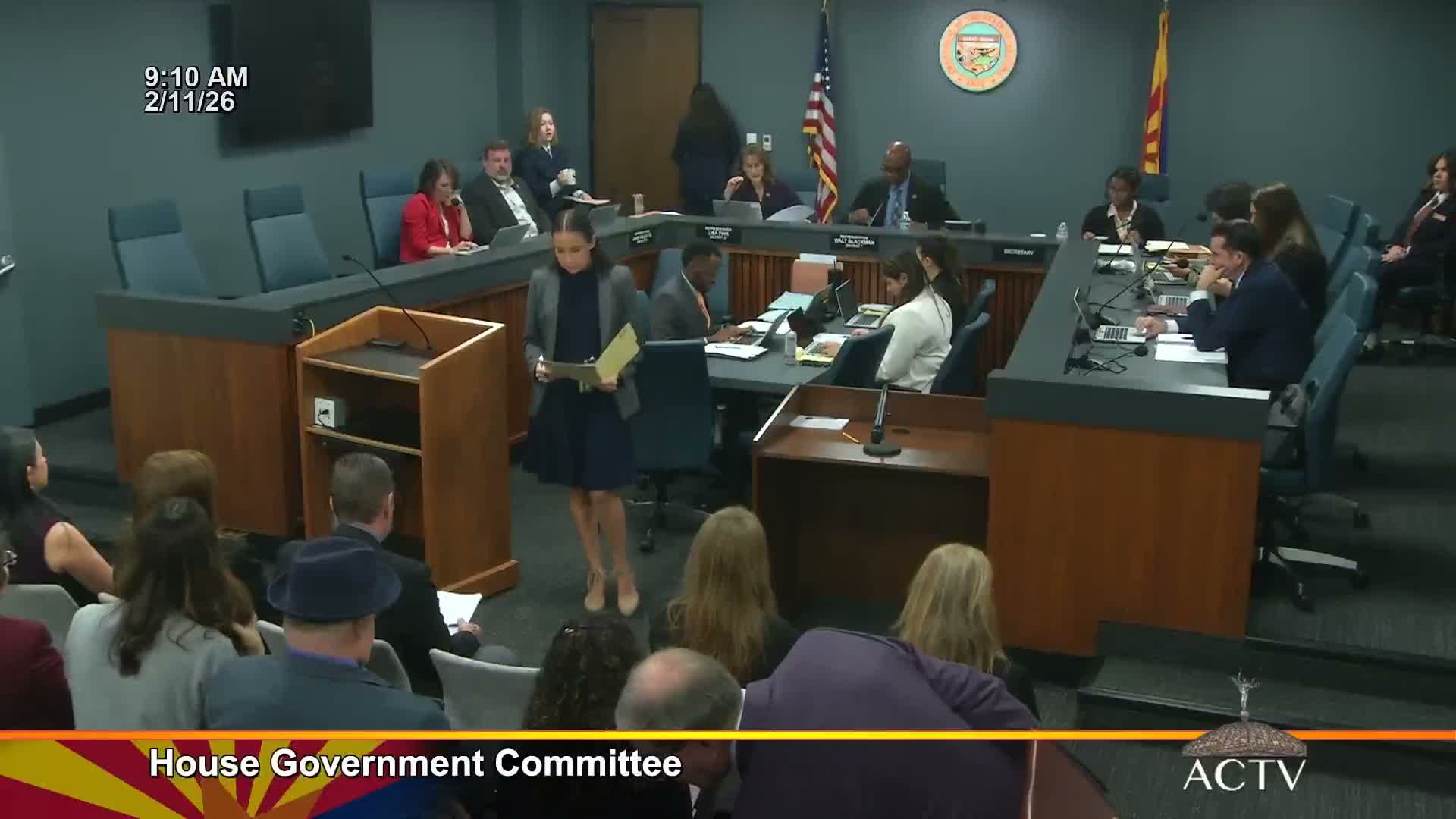
Summary
A House special committee recommended a 'do pass' for House Concurrent Resolution 2044, a proposed constitutional amendment that would expand prohibitions on race- or ethnicity-based preferences in public education, hiring and contracting; committee members split on whether the change would limit discussion of race in public institutions.
A Special House Committee on Government voted to recommend that House Concurrent Resolution 2044 be placed before voters after a divided committee debate on Feb. 10, 2026.
The sponsor (unnamed in the transcript) told members the measure would close perceived loopholes in Arizona’s 2010 constitutional amendment by preventing programs that classify or treat students, employees or contractors differently based on race or ethnicity. The sponsor cited the U.S. Supreme Court decision in Students for Fair Admissions (2023) and recent federal guidance as part of the rationale for the ballot referral.
Supporters who testified said the amendment would reaffirm longstanding voter intent. Matt Beinberg, director of education policy at the Goldwater Institute, said the proposal ‘‘builds on these victories’’ and would ensure ‘‘no student, staffer, candidate, or employee is judged differently or treated differently based upon their race.’’ Paul Parisi, Arizona grassroots director for Our America, and Nathan Duell of Heritage Action also urged approval, arguing diversity, equity and inclusion mandates create unfair preferences and that voters should enshrine the protection in the State Constitution.
Opponents told the committee the resolution is broader than its stated anti-discrimination purpose. An unnamed committee member who opposed the measure argued it would ‘‘chill academic inquiry, discourage honest discussion of history and lived experience, and make public institutions more fearful of litigation’’ by locking restrictions into the Constitution.
Chairman Blackman framed his support in personal terms, recounting family history of discrimination and saying he supported returning the question to voters so Arizonans can decide. The committee reported the measure out with a ‘‘due pass’’ recommendation, recorded in the transcript as 4 ayes and 3 nays. If placed on the ballot and approved by voters, the resolution would amend the Arizona Constitution; the transcript does not specify a target election date.
What’s next: The committee’s recommendation advances HCR 2044 toward further House consideration and, if passed by the Legislature, to placement on a future ballot for voter approval.