Senate narrowly approves tax conformity bill after floor fight over scope of changes
Loading...
Summary
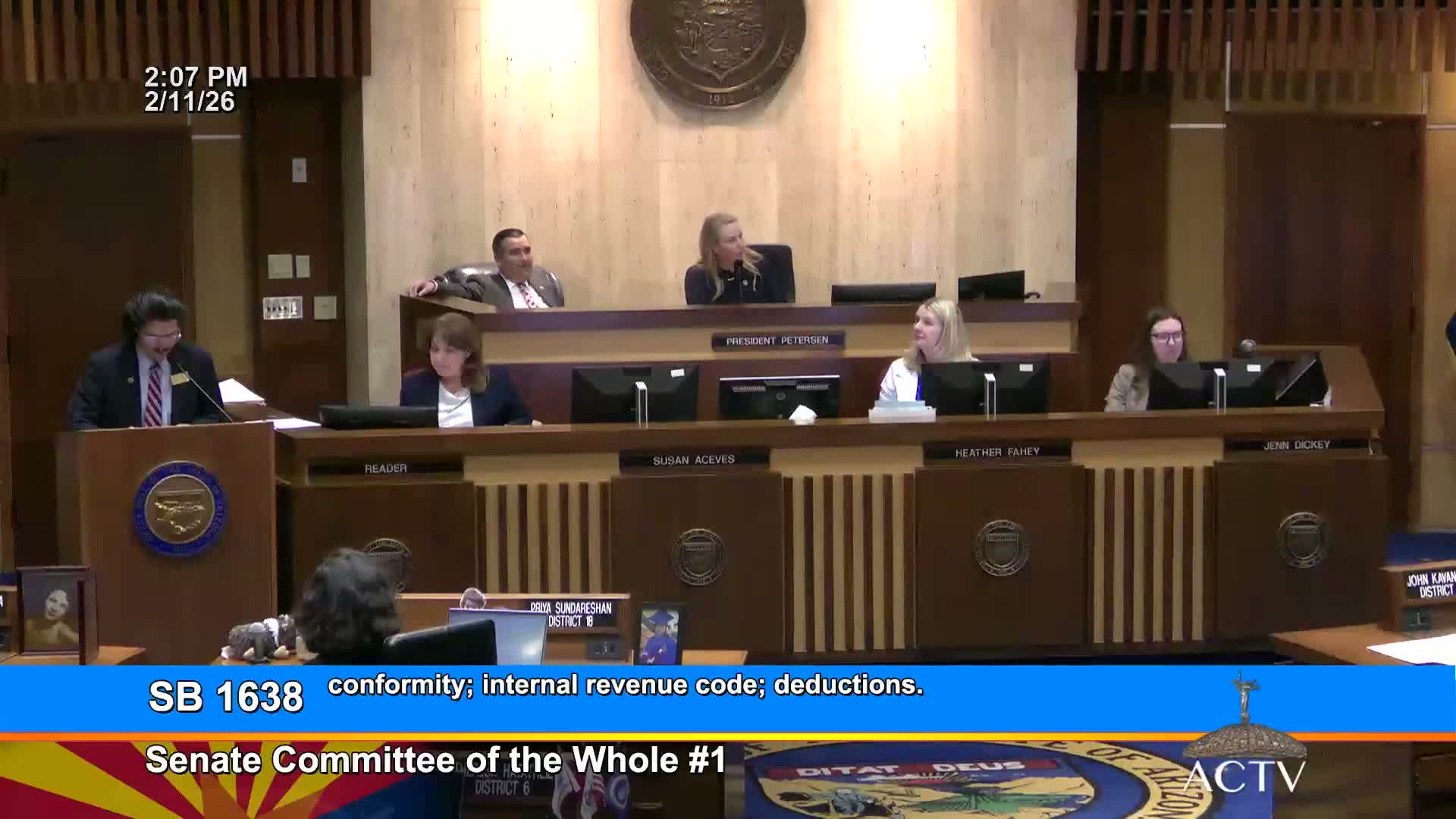
The Senate voted 17–13 on Feb. 11 to adopt tax conformity measures (HB 27‑85 substituted for SB 16‑38) aligning state filing rules with recent federal changes; debate split over protecting taxpayers from having to amend returns versus the bill's benefits for wealthier filers and corporations.
The Arizona Senate on Feb. 11 approved House Bill 27‑85 (substituted for Senate Bill 16‑38), a tax-conformity measure that aligns Arizona law with changes in the Internal Revenue Code. The floor debate focused on whether to adopt full conformity—including provisions that benefit certain itemized deductions and corporate measures—or to adopt a narrower adjustment limited to the standard deduction.
Senator Sundarachian offered a floor amendment to restrict conformity to a standard-deduction adjustment, saying it would help roughly 88% of Arizona filers and avoid broader, costly conformity to federal changes. Opponents of that narrow approach argued the amendment stripped other protections and that full conformity was necessary to prevent taxpayers from having to amend returns.
Senator Epstein criticized dismissive rhetoric about taxpayer forms, saying the question is affordability for families, while other senators warned the full-conformity bill would principally benefit wealthy filers and corporations (citing SALT and GILTI-related provisions). Proponents said the Department of Revenue already issued guidance and that failing to align the statute would force many filers to amend returns and create needless confusion.
After extended floor explanation and recorded debate, the chamber recorded a roll-call result of 17 ayes and 13 nays and passed the substituted House bill. The bill is now transmitted to the House (or to the next procedural step consistent with the substitution recorded on the Senate floor).