
Several SNAP-related bills advance amid warnings they could limit access
Get AI-powered insights, summaries, and transcripts
Sign Up Free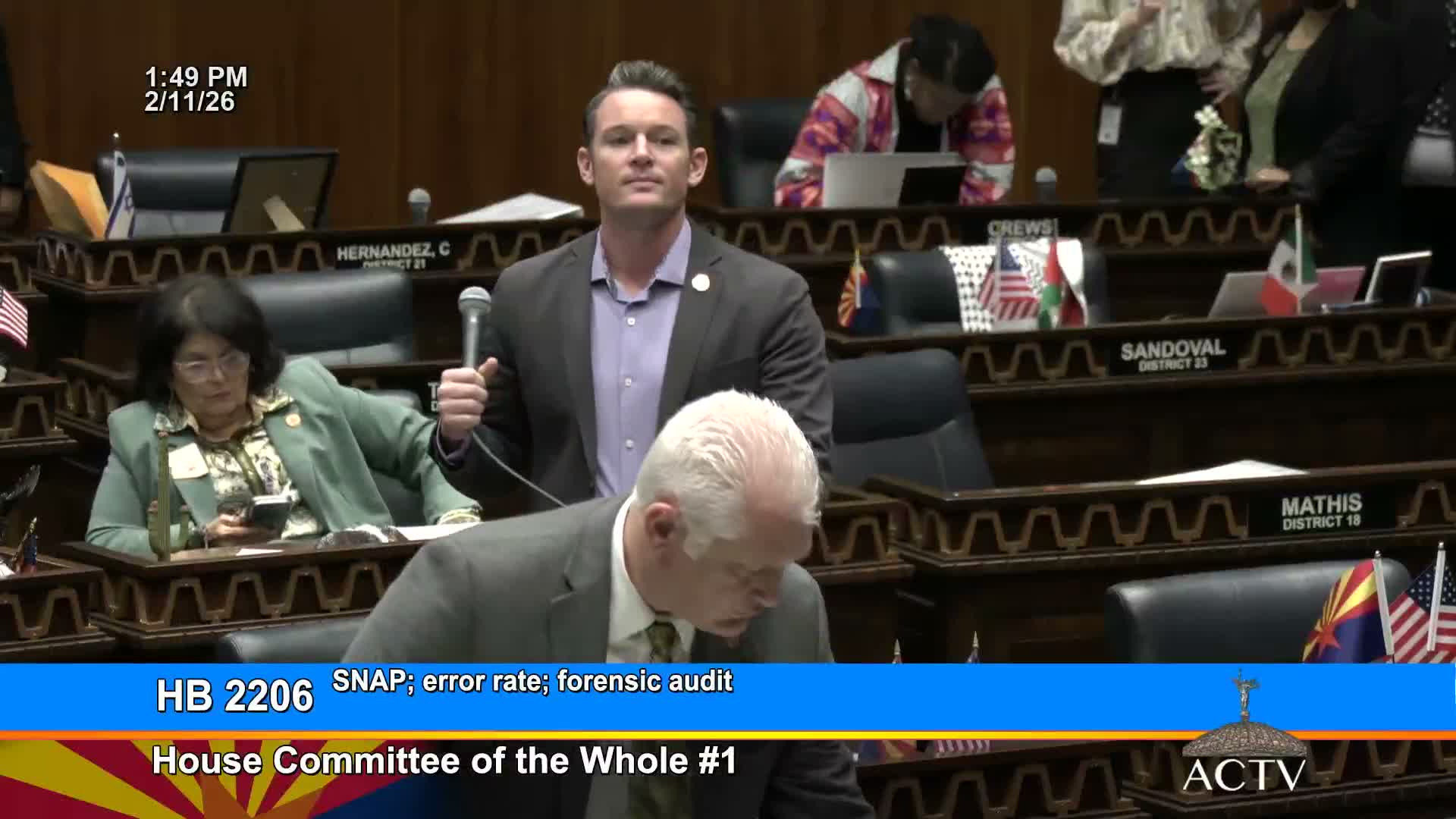
Summary
The House Committee of the Whole advanced multiple bills affecting SNAP administration, payment-error targets and allowed purchases. Sponsors said the measures tighten oversight and promote nutrition; Democrats and advocates warned about imposing unfunded mandates and reducing access for vulnerable SNAP recipients.
Lawmakers spent significant time in Committee of the Whole on bills that would change how Arizona administers and audits the Supplemental Nutrition Assistance Program (SNAP).
Representative Kupper described amendments to HB 2206 as improvements requested by the auditor general and urged adoption. Opponents, including Representative Patty Contreras, warned that the payment error rate is not the same as fraud and said reducing error-rate thresholds without funding would risk eligible Arizonans losing access to benefits. "Without additional funding and support directed to DES, this bill raises the risk of eligible Arizonans not being allowed to access SNAP," Contreras said.
Debate on HB 2396 — a measure to restrict certain SNAP purchases — divided members. Supporters framed the bill as a nutrition-focused reform modeled on WIC; opponents said it would create a "second class of like grocery shoppers" and could raise grocery prices for working families because retailers would shift costs.
Members also debated HB 2448, which would limit the Department of Economic Security's authority to seek certain federal waivers without legislative consent. Representative De Los Santos warned that restricting waiver authority could prevent DES from obtaining waivers in a recession and jeopardize benefit continuity for hundreds of thousands of Arizonans who might otherwise qualify.
The Committee adopted floor amendments and recommended these bills as do-pass as amended. Members repeatedly contrasted compliance with federal guidance (including references to HR 1 and USDA terminology) and the need for additional appropriations to implement administration changes.
Next steps: Committee reports were entered in the journal and the measures were placed on the House calendar for further floor action.