House advances tax-conformity bill after floor debate; Democrats voice fiscal concerns
Loading...
Summary
The Arizona House passed House Bill 2,785 on third reading after a heated floor debate over whether the measure properly funds a large tax-conformity package. Democrats argued the bill would cut revenue for schools and services; the sponsor and supporters said it codifies filing forms already issued by the Hobbs administration.
The Arizona House approved House Bill 2,785 on third reading after members debated whether conforming state law to recent federal tax changes would create an unfunded gap in the state budget.
Supporters, including Representative Olson, said the measure codifies tax forms the Hobbs administration had already instructed taxpayers to use and described the package as a roughly $440 million set of tax cuts that includes no tax on tips or overtime and new senior and standard deductions. "This is the right thing to do," Olson said, urging the governor to sign the bill.
Opponents repeatedly rose to explain their 'no' votes, saying the majority had not provided a plan to pay for the cuts. "The Republicans have no plan to pay for this tax cut for the wealthy and large corporations," Representative Los Santos said, adding that the changes risk reductions in education and health-care funding. Other Democrats said the bill could lead to cuts in school counselors, utility assistance and food programs.
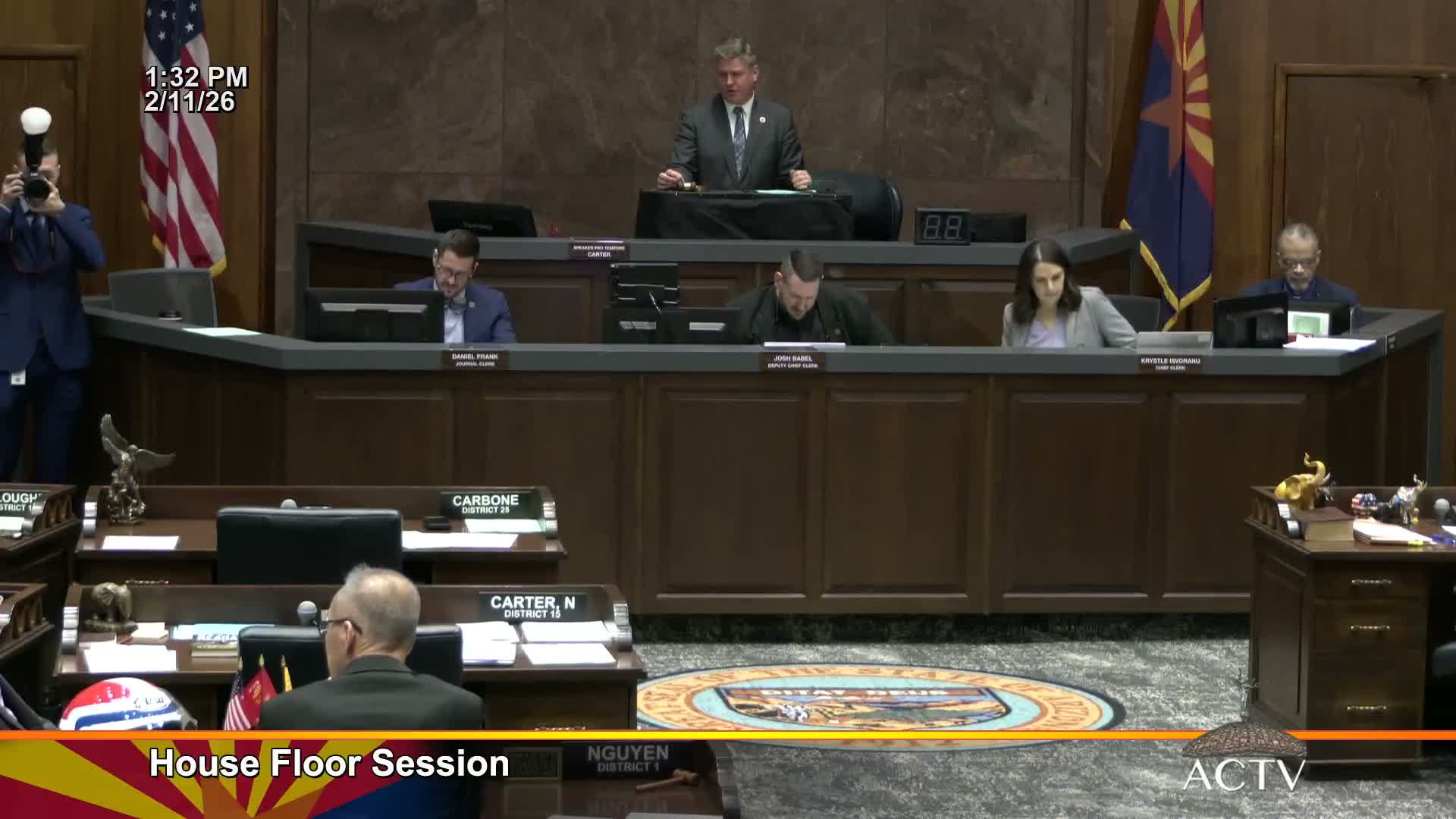
After explanations of votes from both sides, the clerk announced the result and instructed that the bill be recorded and conveyed to the Senate. The clerk’s floor announcement read in part: "By your vote of 3, 2 ayes, 26 nays, and 2, not voting. You have passed. House Bill 27 85."
The passage puts the conformity measure on track for the Senate and for the governor’s signature or veto; supporters called on the governor to sign the bill to avoid a potential filing burden for taxpayers.
The most recent procedural step was that the clerk recorded the action in open session and directed that the bill be sent to the Senate for consideration.