
Arizona Senate advances suite of SNAP bills aimed at tighter eligibility checks, work rules and purchase restrictions
Get AI-powered insights, summaries, and transcripts
Sign Up Free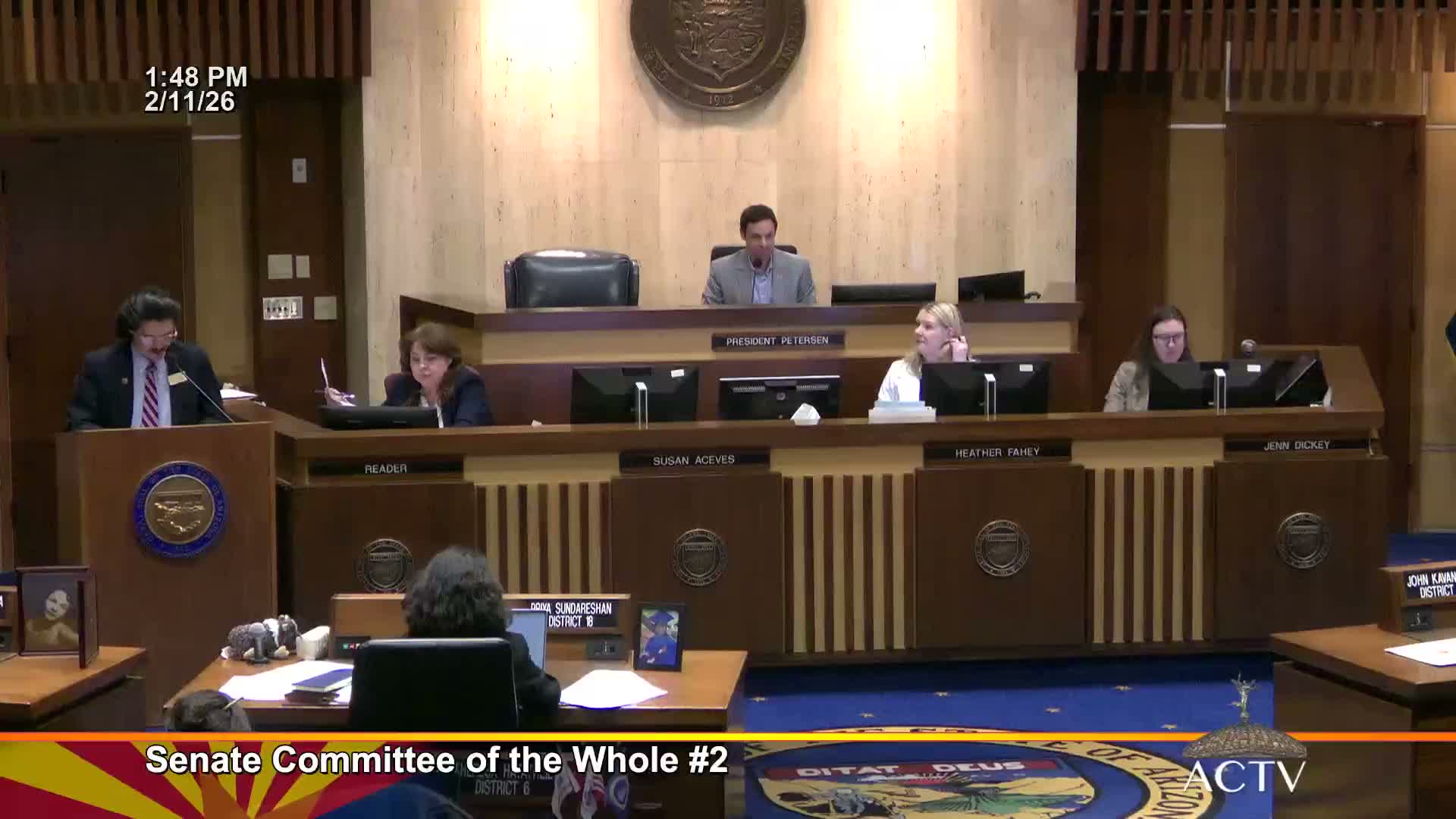
Summary
The Senate passed five bills on Feb. 11, 2026, changing Supplemental Nutrition Assistance Program (SNAP) administration: enhanced verification and referrals (SB1002), mandatory employment-and-training requirements (SB1331), an error-rate audit and penalties (SB1333), limits on waiver requests (SB1334), and restrictions on permitted purchases (SB1368). Passage votes were largely 17–13.
The Arizona State Senate on Feb. 11 advanced a package of measures reshaping how the state administers the Supplemental Nutrition Assistance Program (SNAP), voting to approve five bills that would tighten eligibility checks, impose certain work requirements, authorize a forensic audit tied to an error-rate penalty, bar the Department of Economic Security (DES) from seeking some federal waivers, and restrict selected SNAP purchases.
Senators said the bills seek two distinct goals: proponents argued the measures reduce fraud and state error rates and protect taxpayer dollars; opponents said they would add administrative burdens, risk removing eligible people from benefits, and disproportionately harm rural and tribal communities.
The package included: - SB1002 (amending Title 46, ARS, relating to public assistance): requires enhanced eligibility verification and, as amended on the floor, a mechanism to refer out-of-state EBT card use to the U.S. Attorney’s Office for the District of Arizona. The Senate recorded passage on third reading (roll-call reported as 17 ayes, 13 nays). - SB1331 (mandatory employment and training): establishes mandatory employment and training requirements for certain SNAP participants; the Senate passed the bill (17–13). - SB1333 (error-rate forensic audit): directs a forensic audit tied to SNAP error rates and includes committee amendments; the bill passed (17–13). - SB1334 (waiver prohibition): bars DES from seeking, applying for, or accepting waivers of SNAP work requirements for certain able-bodied adults without dependents; passed (17–13). - SB1368 (allowed purchases restriction): limits what SNAP benefits may be used to buy by restricting selected prepared and low-nutrient items; passed (17–13).
Opponents said the bills duplicate federal rules, will increase paperwork and appeals, and create unfunded administrative burdens for DES. “This bill adds red tape, not accountability,” said Senator QB during floor debate, adding that DES estimated the fiscal impact could exceed $66 million per year and that organized card theft and skimming—not recipient fraud—are major drivers of SNAP losses.
Senator Ortiz, who represents a district with high SNAP participation, said the measures will hurt families and food banks that already stepped in during recent program interruptions: “When we think about the food banks who stepped up… bills like this are not only going to hurt those who are on SNAP, but hurt our food banks,” she said.
Supporters countered that stronger monitoring is needed to lower the state’s SNAP error rate and avoid larger federal penalties. Senator Kavanaugh described the measures as “enhanced monitoring that will remove people who are ineligible” and said reducing the error rate would protect program integrity and taxpayer funds.
Floor debate repeatedly raised rural and tribal concerns: several senators noted that in parts of the Navajo Nation and other reservations there are only a handful of grocery stores and that imposing uniform restrictions or work mandates could be impractical and harmful for residents who travel long distances to shop.
The bills now move to the Arizona House for consideration (or, in the case of measures recorded as transmitted, to the next steps required for final enactment). Where the Senate recorded votes, the result reported on the floor was generally 17 ayes and 13 nays.