Committee advances state rural LIHTC to steer private capital into affordable housing
Loading...
Summary
The Appropriations Committee returned HB2804 with a do-pass recommendation to create a $2 million-per-year rural housing tax credit designed to pair with federal LIHTC; witnesses described projects enabled by tax credits and opponents warned of cost inflation and oversight gaps.
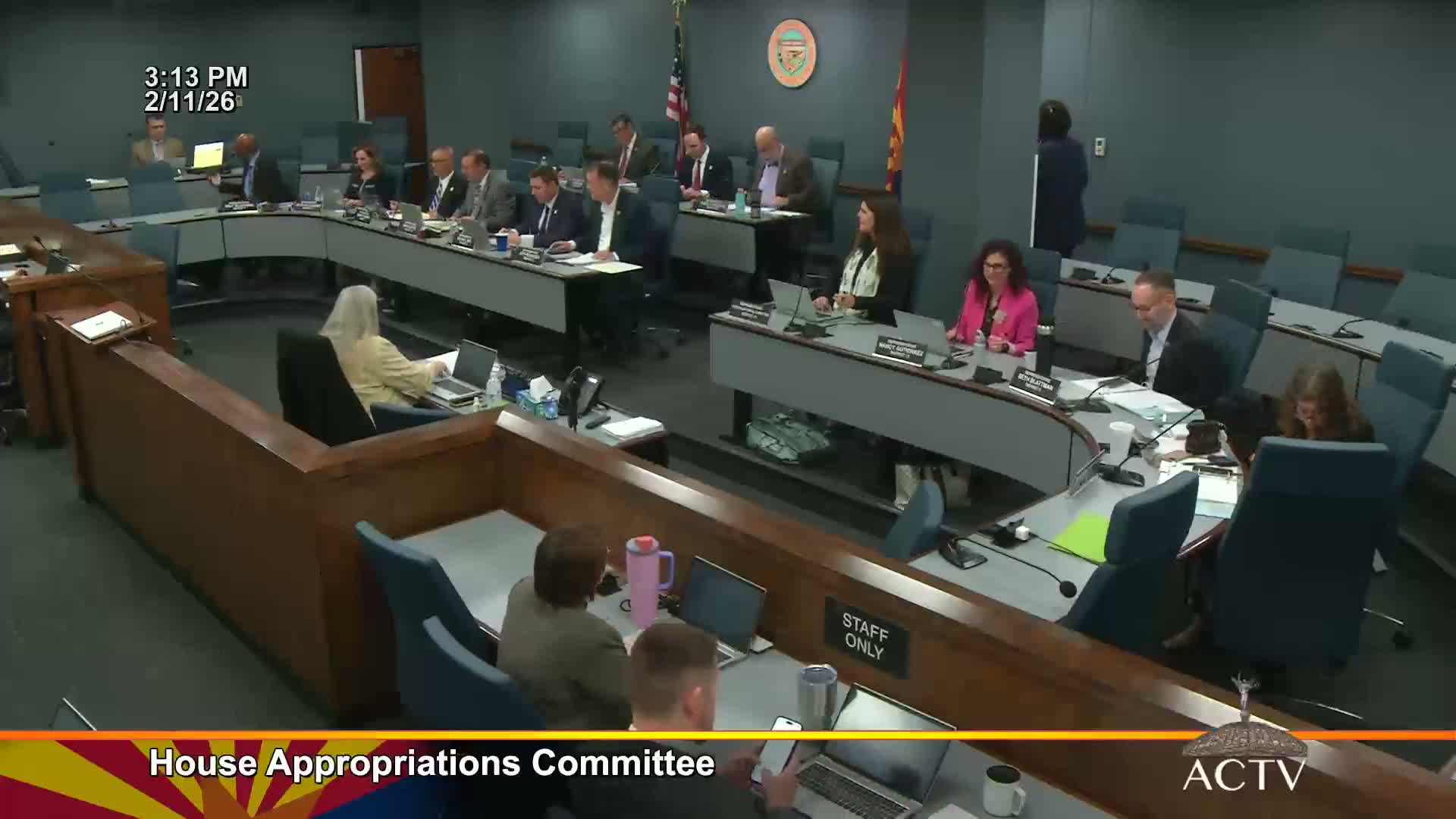
The Appropriations Committee on Feb. 11 advanced House Bill 2804, a measure to reestablish a state rural low-income housing tax credit that pairs with the federal Low-Income Housing Tax Credit (LIHTC).
Staff described the bill as allowing the Arizona Department of Housing to allocate state tax credits for projects wholly located in counties with populations under 800,000 that qualify for federal LIHTC, requiring an eligibility statement and capping allocations at $2,000,000 per year. The bill also includes a repeal date of Jan. 1, 2037.
Sponsor Representative Teresa Martinez (LD16) told the committee the program will help rural communities meet urgent needs for housing for seniors and veterans and "unlock private capital" to finance projects that otherwise would not be feasible. Mayor Becky Daggett of Flagstaff described a recent project financed with tax credits that produced 221 affordable apartments and argued the approach "helps close the gap" by keeping affordable units restricted for 30 years.
Developers testified with project examples, including adaptive reuse and veteran housing, and described how state credits provide a 10-year stream of benefits to investors that stakeholders monetize to generate equity for construction.
Opponents, including Greg Blackie of the Arizona Free Enterprise Club, urged caution, saying state LIHTC programs can create layers of intermediaries, raise per-square-foot costs and complicate oversight. Blackie cited studies indicating higher costs per square foot and cited GAO reports documenting variation and oversight gaps. Supporters and industry witnesses replied that tax credits are a necessary lever in rural markets where private investment otherwise will not support affordable projects.
Committee members questioned the multi-year fiscal mechanics of allocating credits and how costs flow over time; witnesses explained credits are monetized and benefits are realized after buildings are placed in service, creating a multi-year stream of credits. Members ultimately voted to return the bill with a do-pass recommendation (13 yes, 4 no, 1 not voting).
Ending: HB2804 advances out of committee; sponsors and witnesses said the program would be designed to include guardrails and eligibility statements to accompany allocations.