Vigo County oversight board presents Option 6: $222 million new high school plan with multi‑phase modernization and possible county partnership
Loading...
Summary
Consultants and school officials outlined Option 6 — building a new high school east of the river, renovating West Vigo and consolidating other schools — estimating Group 1 construction at $222 million, potential education‑fund savings of roughly $121 million over 10 years in one scenario, and a possible opening as early as August 2029 if sites and financing proceed.
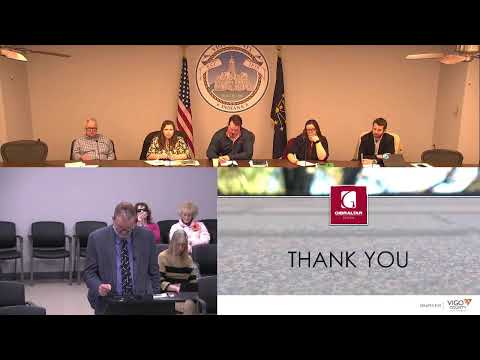
At an oversight board meeting, Dr. John Newport, representing the Vigo County School Corporation, and consultants from Gibraltar presented a multi‑phase facilities plan the board has endorsed as Option 6, which would build a new high school east of the Wabash River, renovate West Vigo High School and consolidate the district from 23 buildings to 16.
Dr. John Newport, representing the Vigo County School Corporation, said the board chose Option 6 after a comprehensive facility study and staff input that aimed to align facilities with current programs and enrollment trends. "The heart and lungs of our $24,000,000 HVAC project in the boiler route is ready to take on whatever form or capacity those buildings may have," he said, noting recent investments the district wants to preserve whether buildings are modernized or replaced.
Chris Kingery of Gibraltar, who led programming and conceptual design work, emphasized that no construction documents or site have been selected and that the renderings shown were illustrative. Kingery described a design range sized to accommodate 2,700 students with flexibility to serve up to 3,000 through scheduling rather than added square footage.
Jim Thompson of Gibraltar walked the board through budgeting conventions for large school projects, distinguishing hard costs (construction) from soft costs (legal, testing, furniture and systems) and recommending an early soft‑cost allowance of about 25 percent. Thompson said the team uses contingency and market assumptions to capture inflation risk; on the schedule he proposed, if a site were selected by fall, site work could begin within months and a new school could potentially open by August 2029 after roughly 30 months of construction.
Presenters quantified savings under different configurations. Newport described a scenario in which consolidating to one new high school, four middle schools and ten elementary schools would yield an annual education‑fund savings of about $12,144,314 and a 10‑year savings figure presented as roughly $121,000,443 for that options comparison. A board member asked for confirmation of the Group 1 estimate; presenters confirmed Group 1 — the new high school east of the river — was estimated at $222,000,000.
Financing options were discussed in groupings: Group 1 (the new high school and the county partnership ask); Group 2 (bond‑funded renovations and elementary expansions that the presenters said could be done within current bonding capacity); and Groups 3–5 (later modernizations and repurposings). Presenters said the district’s bonding capacity could be approximately $150,000,000 depending on interest rates and that Group 2 work might be accomplished without raising the current debt‑service tax rate (stated in the presentation materials as 0.2424), though legal triggers for a referendum change over time.
Board members raised questions about land acquisition costs (presenters said site purchase is not currently included and would be addressed when a site is chosen), West Vigo community identity and transportation logistics across the river that factor into whether a single high‑school consolidation would be acceptable. Presenters noted prior community engagement — including public forums associated with a failed 2022 referendum — showed resistance to a single consolidated high school and said renovation scenarios remain politically and culturally relevant.
In public comment, Commissioner Clinkenbeard thanked the board and presenters for the work, described the process as "painful" but necessary and urged that taxpayers be kept in mind as officials pursue a path that preserves the school corporation’s long‑term viability.
The board approved routine minutes and an engagement letter with outside counsel; it also authorized the president to sign that engagement. The board canceled its next Tuesday meeting and scheduled the following meeting for Thursday, Feb. 19 at 10:30 a.m.
What happens next: presenters said Groups 1 and 2 were ideally run together, that final cost detail will require site selection and design, and that a referendum — if needed — could only occur in an even year (2028 or 2030 were noted) depending on final financing triggers.