
Willacy County commissioners approve cybersecurity grant application, IT migrations and multiple public-safety purchases
Get AI-powered insights, summaries, and transcripts
Subscribe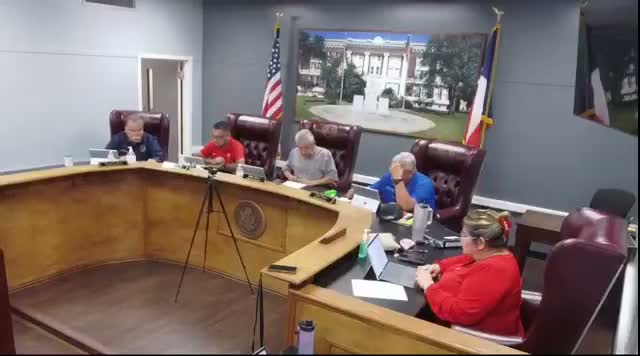
Summary
On Feb. 12 the Willacy County Commissioners Court approved asking UTRGV to provide technical assistance on a State and Local Cybersecurity Grant Program application, authorized server migrations, approved election equipment and several public-safety purchases and donations.
Willacy County commissioners on Feb. 12 approved a package of routine and project-specific actions that included authorizing university technical assistance for a cybersecurity grant application, approving server migration work for the county's eForce system, and accepting a three-year election software license.
The court voted to allow the University of Texas Rio Grande Valley’s SARAS center to provide no-cost technical assistance in preparing an application to the State and Local Cybersecurity Grant Program and to authorize county staff to submit the grant application. Ayesha Dos Reyes, who identified herself as a SARAS representative from UTRGV, told the court “there are no fees for my service” and said the university would not apply on the county’s behalf but would help with application strategy, keywords and post-award technical reporting if needed. Commissioners discussed and noted the current grant cycle’s local match requirement (discussed in the meeting as roughly 30 percent); the court approved the authorization and directed staff to return an edited resolution designating the county auditor as the financial officer for the award if required.
The court also approved vendor work to migrate the county’s eForce application and Active Directory to a new virtual environment. IT staff and a vendor described standing up a SQL database server and an application server, estimated hours of work and a combined cost spread across two proposals; commissioners approved funding the work from capital accounts (capital fund 2) and other available sources after confirming budget options. County staff noted some credits from prior work would offset cost estimates.
Elections staff asked the court to approve procurement of Hart Intercivic polling pads and a three-year master software license funded from election revenues; the court approved the purchase and the associated license agreement, with staff saying deployment would be staggered to allow training and would not be ready for the May election.
Separately, the court approved multiple public-safety purchases and disposals: authorization to trade in older patrol rifles for store credit and to modernize a precision long-range rifle (estimated $3,800) and an accessories purchase for up to $1,500; donations of surplus Motorola portable radios to volunteer departments; and other routine purchases. The court also ratified a previously completed inmate transport and approved routine monthly financial reports, budget amendments and continuing-education certifications reported by county officers.
The motions carried with vocal assent from the bench. Several items required staff follow-up: finalizing the cybersecurity resolution and uploading the grant application before the 5 p.m. submission deadline, confirming migration start dates for the eForce project, and scheduling elections-equipment training.
The court moved into agenda items covering project approvals and budget matters before noting planned executive-session items on legal and real-estate matters.