
President emphasizes law-enforcement gains while declining details on DHS funding talks
Get AI-powered insights, summaries, and transcripts
Subscribe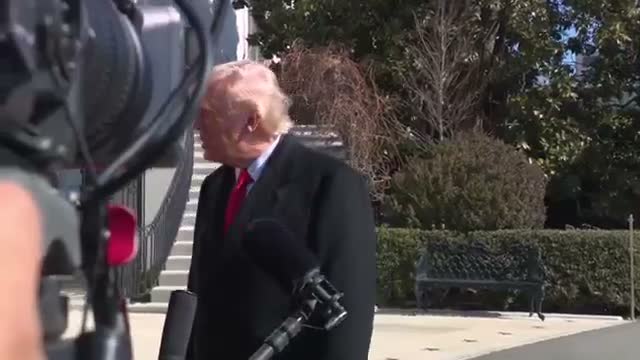
Summary
Asked about negotiations to avoid a DHS shutdown, the President declined to forecast a deal, emphasized protecting law enforcement, and repeatedly credited ICE and Border Patrol with removing "hundreds of thousands" of criminals and producing historically low crime numbers.
When asked whether he was negotiating with Democrats to avert a possible Department of Homeland Security funding lapse, the President declined to detail negotiations, saying simply, "See what happens," and emphasizing that "we always have to protect our law enforcement."
During the exchange he repeatedly touted ICE and Border Patrol actions, saying they had taken "hundreds of thousands of criminals out of our country" and asserting that "we have the best crime numbers we've ever had" and that crime statistics were the "best in 125 years." Those claims were used to frame his position that protecting law enforcement is a priority in any DHS deal.
Reporters asked whether the President was personally involved in DHS funding talks and where he saw room for compromise; he reiterated loyalty to law enforcement and said he knew "what they can live with," but did not outline specific concessions or negotiating positions. A later question about concessions to ICE was met with the same emphasis on supporting law enforcement.
Why it matters: DHS funding and border policy are central to immigration and public-safety debates. The President's public framing elevates enforcement accomplishments as a rationale for his negotiating posture, but the briefing did not contain details about specific legislative terms, funding levels, or concessions.
What remains unclear: The administration did not provide specifics on what a DHS deal would include, what concessions might be made to ICE, or whether legislative leaders had reached a concrete agreement. Independent confirmation of the enforcement statistics cited was not provided during the exchange.
Next steps: Journalists and policymakers should seek official DHS, ICE and congressional statements and data to verify enforcement and crime claims and to learn whether a funding agreement is reached.