Get Full Government Meeting Transcripts, Videos, & Alerts Forever!
Get email alerts on the County Finance topic
No spam. Unsubscribe anytime.
Penobscot County commissioners review 8-week accounting reconciliation proposal, move to executive session
Summary
Commissioners met with Jericho Strategic Advisors on Feb. 13 to review a proposed eight-week, hybrid on-site/remote engagement to reconcile accounts and prepare audit-ready documentation for FY24–FY25; the board voted to enter executive session to discuss contract details.
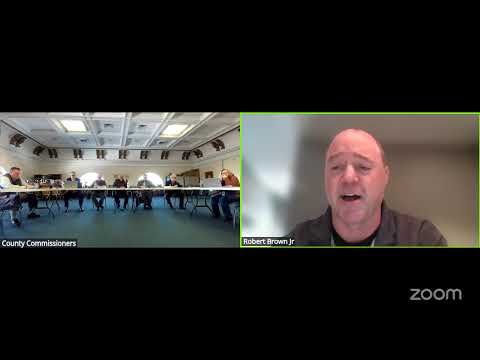
Penobscot County commissioners met on Feb. 13, 2026, with consultants from Jericho Strategic Advisors to review a proposed hybrid, phased engagement to reconcile accounting records and assemble audit-ready documentation for fiscal years 2024 and 2025.
The vendor, represented by Jason Sharp of Jericho Strategic Advisors and Robert M. Brown Jr. (identified in the presentation as an internal partner at CPACFE), outlined a five-phase approach the team said could be completed in about eight weeks. The firm described a mix of remote data analysis and targeted on-site work, weekly status reporting, and deliverables that would include data-extraction confirmation memos, a gap analysis, a chart-of-accounts crosswalk, validated bank reconciliations and a risk-assessment engagement plan.
Brenda, a county staff member who described recent cleanup work already underway, said some documentation had been provided to the vendor and that outstanding adjustments from prior years remain. Brandon Palmer, the county finance director, and Glenn Moore, the county treasurer, were introduced during the meeting and took part in the exchange.
Commissioners and staff raised practical questions the vendor said would be addressed during an initial kickoff: who provides secure access; whether the vendor would log in directly or county staff would place files in a secure folder; and how duplicate transactions and reconciliation anomalies would be identified and resolved. The vendor said it would run extra backend checks, present findings to county staff for review, and recommend—but not post—adjusting journal entries unless the county authorized such changes.
The presentation covered the recent migration of accounting data (discussed in the meeting as a migration from Trio to Edmonds completed in December 2024) and whether mapping between the systems was available. The vendor recommended using available mapping to reconstruct financial statements and suggested posting journals in Edmonds once reconciliations were confirmed so audit schedules align with auditor expectations.
On timing and risks, the vendor said unknown issues in county records or limited auditor availability could delay completion and emphasized early coordination with auditors. Commissioners pressed for clarity on turnaround expectations and documentation standards; the vendor said it would provide weekly accounting of completed tasks, hours and costs, and adjust the plan if phases finished early or if unexpected issues emerged.
Near the end of the workshop, the board agreed to move into an executive session to discuss contract negotiations and related statutory authority, and the chair announced the commission would enter executive session; no public roll-call tally was recorded in the transcript.
Next steps recorded during the open session included a planned kickoff to define access, a vendor timeline tied to an eight-week delivery target, and follow-up coordination with the county’s auditors before public action on any contract.