Get Full Government Meeting Transcripts, Videos, & Alerts Forever!
Get email alerts on the City Governance topic
No spam. Unsubscribe anytime.
Council and staff review three years of goals: ERP, housing and mental‑health wins and stormwater setbacks
Summary
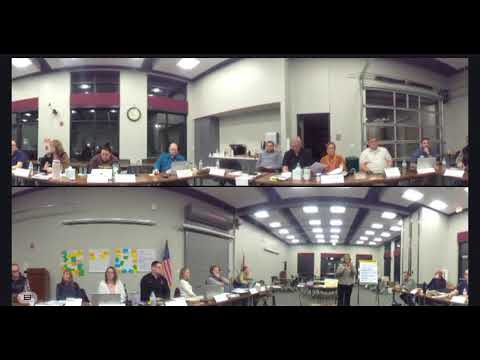
At a retreat meeting the council and senior staff reviewed three years of priorities — highlighting successes such as ERP implementation, housing coalition work and expanded crisis response — and examined setbacks, most notably public backlash during the stormwater fee effort and the limits of staff capacity.
Councilors and department directors spent a long session cataloging what worked over the past three years and why, and where the city stumbled.
Successes they credited to specific leadership, funding and partnerships included the citywide ERP (enterprise resource planning) rollout, improved water‑system projects (including the North tank), a coordinated housing coalition that led to the Albany County Housing and Land Trust, and significant expansion of crisis intervention training and a case manager position to support mental‑health responses with law enforcement. Staff grant seeking and partnerships were repeatedly cited as a factor that enabled multi‑year outcomes.
At the same time, participants said the implementation of a proposed stormwater fee exposed weaknesses in pacing, public communication and timing: detailed calculations and mapping arrived late in the process, leading to intense public comment and the suggestion that the city should have phased outreach and implementation to allow more time for public digestion. Council turnover during the initiative also complicated messaging. Several councilors and staff said projects that rely on external partners or easements (for example, the North Side sanitary sewer) run into delays that are beyond the city’s sole control.
Why this matters: Councilors said clearer, measurable goals (SMART-style objectives), realistic timelines and ensuring appropriate staff resources are key lessons. Speakers emphasized the role of staff leadership in sustaining multi‑year efforts and the value of telling the "story" of successes to maintain public trust.
Notable exchanges: City manager Todd Beazer described a "flywheel" of communication and announced he was "taking the lid off" previous limitations on direct council‑to‑director contact, while warning staff will raise workload concerns back to him if conflicts arise. One councilor raised a concern that the city had not been able to "protect community water rights" in a state process, a technical claim discussed as a frustration during the retrospective.
Next steps: Facilitators and staff will use the retreat’s takeaways to help councilors craft more-specific objectives the next day, emphasizing measurable outcomes, realistic scope and alignment with staff capacity.