Get Full Government Meeting Transcripts, Videos, & Alerts Forever!
Get email alerts on the Strategic Priorities topic
No spam. Unsubscribe anytime.
Laramie council retreat narrows priorities to housing, infrastructure, community engagement and financial sustainability
Summary
At a full‑day retreat, councilors and staff used table exercises and dot‑voting to identify top strategic priorities (housing, infrastructure, community engagement, financial sustainability and economic development); staff will convert the outcomes into measurable objectives and return with a draft implementation plan in the coming weeks.
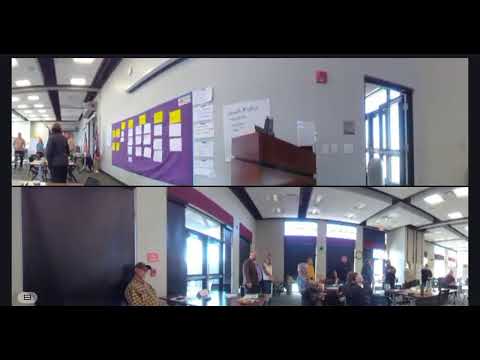
Laramie City Council members spent a goal‑setting retreat workshop refining strategic priorities and drafting measurable objectives to guide 2026 work. Through a facilitated sequence of table exercises, headline visioning and a dot‑vote prioritization, council chose a set of focus areas staff will translate into actionable, time‑bound objectives.
Participants converged on five top focus areas: housing (including use of existing tools and ‘Project 34’ as an attainable‑housing initiative), core infrastructure (water, sewer, stormwater, sidewalks and a citywide parking plan), community engagement and communications (including an update of digital infrastructure), financial sustainability (evaluating revenue streams and reserves) and economic development (public‑private partnerships and development zones).
The retreat emphasized a standard implementation cycle—assess, establish, implement and evaluate—with routine ‘‘report out’’ steps so residents can see progress. Staff leaders asked for time to consolidate the workshop output into measurable key results and graphics for public communication; they proposed returning to council in roughly two to three weeks with a refined plan and recommended metrics.
Facilitators recorded specific near‑term items that received strong support in the dot vote: using existing housing tools and seeking new housing resources, evaluating the Unified Development Code to support housing production, evaluating city revenue sources ahead of the annual budget, establishing a scheduled street‑sweeping program and updating the city website and digital communications. Councilors also discussed time‑sensitive outreach tied to potential May and November 2026 ballot measures and the need to balance long‑term projects (3–10 years) with objectives that can be accomplished within a year.
No formal ordinances, motions or binding votes were taken during the retreat; the council asked staff to return with measurable goals and recommended implementation steps for council review and formal action where needed.