'Make Elections Great Again Act' introduced, proposing photo ID, citizenship checks and an end to post‑election ballot counting
Loading...
Summary
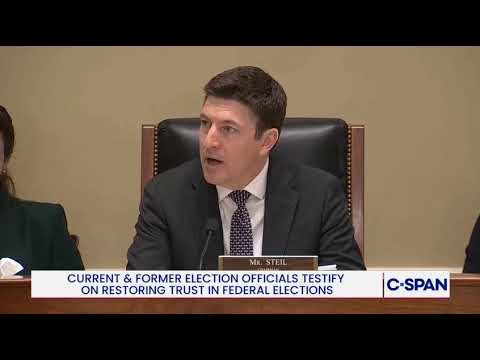
An unidentified speaker introduced the "Make Elections Great Again Act" (MEGA Act), proposing to require photo identification, citizenship verification for federal voters, audible paper ballots and to stop sending unsolicited mail ballots; the speaker cited Article I, Section 4 and entered Georgia election data into the record.
An unidentified speaker introduced the "Make Elections Great Again Act" (MEGA Act), laying out proposals the speaker said would "improve voter confidence" by requiring photo identification, confirming U.S. citizenship for federal voters, ending ballot counting after election day, providing audible paper ballots and stopping unsolicited mail ballots.
The speaker framed the legislation as rooted in Article I, Section 4 of the U.S. Constitution, which assigns Congress authority to regulate the "time, place, and manner" of federal elections, and said federal election law has not been updated since 2009. "That's why I've introduced the Make Elections Great Again Act or the MEGA Act," the speaker said.
In a prepared sequence of policy priorities, the speaker listed specific changes the bill would require: an end to processing ballots after election day, mandatory photo ID to cast a ballot, verification that voters are U.S. citizens for federal elections, audible paper ballots for verification, and not mailing ballots to voters who have not requested them. The speaker characterized these measures as "common sense" reforms intended to "make it easy to vote and hard to cheat."
The statement attributed several claims to the speaker about the broader context for the bill. The speaker said voter confidence "has dropped" in the previous year and asserted that the "Biden administration's failed immigration policies has resulted in over 10,000,000 illegal aliens pouring into our country" during that time (claim attributed to the speaker). The speaker also said "non citizens on voter rolls weaken voter confidence" and cited a named example, saying "that's exactly what Ian Roberts, an illegal alien, did when he registered to vote in the state of Maryland." Those assertions were presented by the speaker as rationale for the bill; the transcript records the speaker making these claims but does not supply independent evidence within the session to substantiate them.
Anticipating partisan pushback, the speaker said Democrats have likened similar proposals to "Jim Crow 2" and "voter suppression," attributing those characterizations to Senate Majority Leader Chuck Schumer and House Leader Hakeem Jeffries and calling those statements "false" and insulting to voters. The speaker compared the proposals to Georgia's 2021 election law, noting that initial criticism and corporate responses followed that state's reforms, but said Georgia has since held two statewide elections and, in the speaker's view, outcomes and surveys do not support the suppression narrative.
The speaker entered three news articles into the record and emphasized a University of Georgia post‑election review of the 2022 general election, summarizing figures the speaker said were in the report: that 95% of respondents rated their election experience "excellent or good," that the positive impression spanned key demographic groups, and that "75% of voters waited less than 10 minutes" to vote. The speaker also said, in the speaker's characterization of the survey results, that "0% of blacks reported a poor or negative experience in the state of Georgia, statistically." Those figures were presented by the speaker as evidence; the transcript records the speaker citing them but does not include the full report text or independent verification in the hearing record.
The session, as recorded in the transcript, contains the speaker's policy pitch and stated intent to continue dialogue with state and local election officials. The record shows a presentation of proposals and supporting materials but does not record any formal motion, committee vote, or floor action on the MEGA Act during this session.