
Dream Center update: council hears about youth programs, new social-worker support and barriers for unhoused residents
Get AI-powered insights, summaries, and transcripts
Subscribe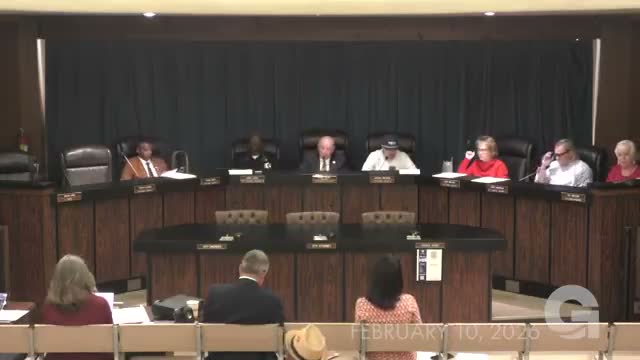
Summary
Eddie Nichols updated the Gadsden City Council about Dream Center programs, reporting high participation (about 5,300 visits in January), sports leagues and holiday outreach; he introduced a master's-level social worker and an intern, and council members discussed coordinating IDs and services for unhoused residents.
Eddie Nichols told the Gadsden City Council on Feb. 10 that the Dream Center’s work with children and young adults continues to expand, and he described recent program activity and the center’s new social-work support.
Nichols, invited as a citizen representative, said the center gave out roses and candy at a Valentine’s event, ran a Christmas program that served nearly 400 children at Floyd Elementary and organized sports programs with roughly 18 basketball teams and nearly 200 players. He said the center logged about 5,300 visits to its facility in January.
Nichols said the Dream Center has added a master's-level social worker to oversee services and introduced an intern, Mandy Keener. City officials and Nichols said the social-worker role will allow the Dream Center to coordinate internships, counseling and referrals and to better connect families to services.
Council members used the presentation to raise coordination gaps around services for the unhoused. One council member recounted the city's past homelessness coalition and identified a frequent barrier: many unhoused people lack identification documents (birth certificates, Social Security) because items were discarded during eviction, which blocks access to prescriptions, food assistance and other programs. Council members discussed existing local programs — including a Salvation Army initiative and a judge-led program that can help obtain IDs — and the possibility of coordinating a mobile ID bus to assist residents in obtaining state IDs.
Why it matters: The Dream Center provides direct services to children and families and is supporting a triage-style approach to coordinate housing, IDs and health care for people experiencing homelessness. Council members emphasized the need for better coordination among nonprofits, the Salvation Army and other agencies so services are not duplicated and families receive continuous support.
What comes next: Council members offered to help coordinate agency partners and called for staff follow-up to identify resources (for example, using a mobile ID bus or Salvation Army judge-led programs) so residents can obtain identification and gain access to benefits and employment.