Get Full Government Meeting Transcripts, Videos, & Alerts Forever!
Get email alerts on the Land Use Reasonable Accommodation topic
No spam. Unsubscribe anytime.
County holds final hearing on reasonable-accommodation rule covering certified recovery residences
Summary
At a final public hearing, staff presented land development regulation amendments to create a reasonable-accommodation process (citing SB 954) and confirm certified recovery residences may request accommodations; commissioners raised neighborhood impacts and staff said case law limits discriminatory regulation and clarified this covers post-treatment residences, not detox centers.
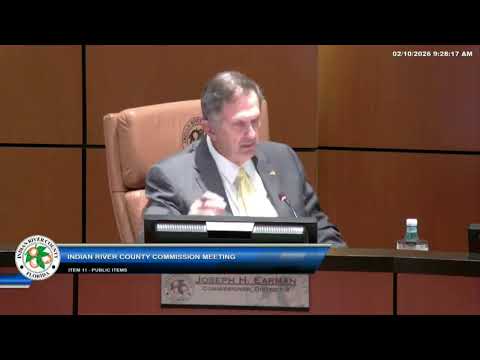
At a final public hearing the Board of County Commissioners heard a staff presentation on proposed amendments to the county's land development regulations to create a reasonable-accommodation procedure and confirm certified recovery residences can request such accommodations.
Ryan Sweeney, identified in the record as assistant planning development services director, told the board the amendments were prompted by state direction and Senate Bill 954 (2025). He outlined the proposed sections: aligning the LDRs with the Fair Housing Amendments Act and Title II of the Americans with Disabilities Act; establishing submission and review timeframes; treating medical information as confidential; giving the Planning & Development Services director authority to approve, partially approve, or deny requests; setting appeal review by the county administrator; and confirming that no fee will be charged for reasonable-accommodation requests.
Sweeney said the Planning & Zoning Commission recommended adoption by a 7-0 vote and that staff recommended the board adopt the ordinance at the final public hearing. He quoted the statutory reference given in the record as "section 397.4877 sub 15" and another internal statute citation that appears in the record as "section 9397.48715"; the transcript contains these numeric references and they are reported here verbatim from the meeting record.
A commissioner asked how recovery residences and other shared settings fit into residential neighborhoods, citing complaints about "halfway houses" appearing in private neighborhoods. In response, a presenting official said "there's case law on point" and that legal limitations generally prevent the county from discriminating against certain types of housing in residential areas; Sweeney added the proposed amendments apply to post-treatment residences (not detox centers) and noted regulatory thresholds commonly used by agencies that treat five or six residents as a single-family home for zoning purposes.
Why it matters: the LDR amendments establish a formal process for residents and operators to request reasonable accommodations under federal disability laws and clarify how certified recovery residences can be treated under county land-use rules. Commissioners asked for clarity about neighborhood impacts; staff pointed to legal constraints and existing case law restricting local discrimination.
What the record shows: staff recommended adoption and noted Planning & Zoning's 7-0 recommendation. The meeting excerpt ends with commissioner questioning and staff clarification; no final board vote on the LDR amendments appears in the provided transcript.