Get AI Briefings, Transcripts & Alerts on Local & National Government Meetings — Forever.
Van Zandt County adopts temporary moratorium on green-energy construction pending AG review
Loading...
Summary
After a packed public hearing, the Van Zandt County Commissioners Court voted to impose a temporary, time‑bound moratorium halting construction and surface operations for green energy projects while the Texas attorney general's office investigates foreign components and compliance with state directives.
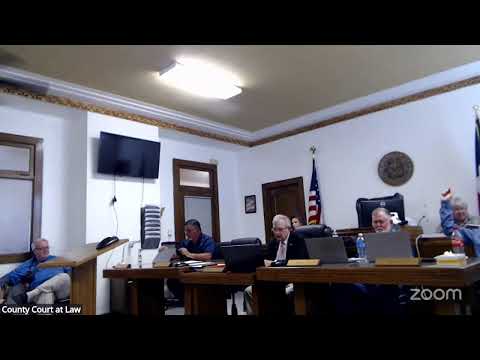
Van Zandt County's commissioners voted on Feb. 11 to adopt a temporary moratorium halting surface and construction work on green energy projects in the county while the Texas attorney general's office completes a review into the use of foreign-made components and compliance with state directives.
The measure, presented by a commissioner who read a written order onto the record, cites the Lone Star Infrastructure Protection Act and the county's authority under the Texas health and safety code to protect public welfare. The county's draft order says the moratorium would be narrowly tailored and time‑bound to allow the attorney general's office to finish an investigation into whether components linked to companies on the governor's prohibited list were incorporated into projects that tie to the electrical grid.
County officials stressed the step was not intended to create new land‑use rules but to exercise authorities tied to state action. "This moratorium rises not from fear ... but from responsibility," the commissioner who moved the measure told the court during debate, echoing repeated public concern about fire safety, decommissioning plans and cybersecurity.
The hearing drew dozens of speakers from Van Zandt and neighboring counties. Supporters described prior local struggles enforcing fire‑safety codes and cited a temporary restraining order filed by the local district attorney against one battery project. "We were successful as a commission to pass a restraining order," one speaker said, urging the court to apply the same principle while the attorney general investigates. Several others framed the issue as a security risk tied to foreign supply chains; witnesses and community leaders presented expert letters and described operational and environmental concerns including decommissioning liability and hazardous waste handling.
Opponents appearing at the hearing urged commissioners to protect property rights and local economic benefits tied to utility‑scale battery and solar projects. One commenter said numerous Texas projects have operated without incident and warned that a moratorium could cost the county tax revenue and lead to litigation.
After public comment and discussion, the court voted to adopt the temporary moratorium and instructed staff to coordinate with the attorney general's office to define the moratorium's duration and scope. The motion passed on a voice vote. The order as read into the record directs the county to evaluate compliance with NFPA fire standards, cybersecurity and operational‑technology safeguards and the Lone Star Infrastructure Protection Act before permitting further surface or construction operations for affected projects.
The moratorium does not itself impose new land‑use ordinances, according to staff; rather, it suspends specified activity while the county and state complete reviews. The commission scheduled follow‑up communications with the attorney general's office and signaled ongoing review of individual project compliance with fire codes and state guidance.