
Committee weighs stricter rules for IV therapy at med spas after Texas death
Get AI-powered insights, summaries, and transcripts
Subscribe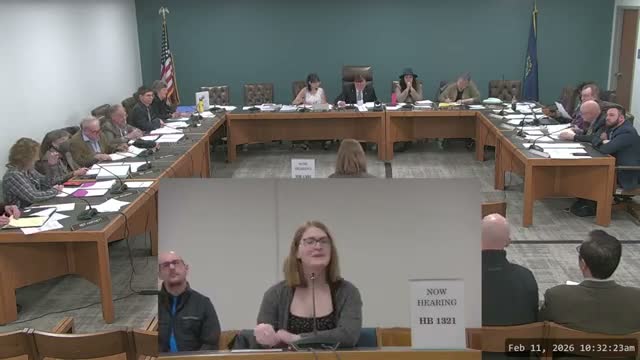
Summary
Lawmakers considered HB 13 21, which would require licensed medical professionals to perform elective IV therapy at med spas. Supporters cited a Texas death and gaps in oversight; industry witnesses urged amendments to include paramedics and focus on medical oversight rather than location.
Representative Alice Wade urged the House Health, Human Services and Elderly Affairs Committee to pass HB 13 21, saying the bill would close a dangerous gap that allows untrained people to insert intravenous lines at med spas. “If you’re gonna be inserting an IV into somebody’s bloodstream, you need to be a licensed medical professional,” Wade said, citing a recent Texas death she described as the impetus for the proposal.
Why it matters: The bill would require that elective IV therapy — commonly marketed as “vitamin drips” and wellness infusions — be administered by licensed clinicians such as physicians, physician assistants, advanced practice nurses or registered nurses. Proponents said the lack of consistent licensing and medical oversight has produced safety risks, counterfeit products and limited recourse for harmed patients.
What supporters said: Wade told lawmakers med spas can open with virtually no medical supervision and that in New Hampshire there have been cases where “nonmedical professionals” advertised IV treatments. She framed the bill as a preventive public‑safety measure and urged the committee to act before a local tragedy occurs.
Industry witnesses: Multiple business operators and clinicians told the committee they support regulation but asked the panel to refine the bill so it does not inadvertently bar trained emergency medical providers.
- Matthew Loranger, a licensed paramedic and owner of Hydroputics IV Hydration, described his company’s practices: paramedic staff, physician‑signed protocols, medication sourcing from regulated pharmacies and routine documentation and monitoring. He said paramedics and advanced EMTs receive mandatory IV training and are able to manage emergencies in the field.
- Patrick Lee, an emergency physician and business partner of Hydroputics, said the model was developed in response to COVID‑era demand and emphasized that operators who follow medical protocols and obtain malpractice coverage can safely deliver at‑home or clinic IV services.
- Candace Barth of The Drip Bar and the American IV Association said many legitimate operators already use paramedics, advanced EMTs and registered nurses, and argued the state’s EMS licensing structure already requires IV competencies at the AEMT and paramedic levels.
Points of contention: Committee members repeatedly asked whether the bill should be tied to the setting (e.g., physician’s office) or to the license and scope of the person performing the procedure. Several representatives proposed language that would allow licensed paramedics or trained AEMTs to perform elective IV therapy under medical supervision. Wade said she modeled the bill on Texas’s “Jennifer’s Law” but was open to amending the list of allowed providers.
What the department said: A DHHS legislative liaison, Abby Rogers, said DHHS is not taking a position but flagged technical statutory placement and suggested aligning the bill’s language with HIPAA and existing statutes; Wade and members indicated willingness to work on technical fixes.
Next steps: The hearing closed after broad stakeholder testimony and questions. Committee members signaled interest in amendments to tie the rules to supervision, to acknowledge EMS training pathways, and to clarify whether home or mobile services are included. The committee did not take a final vote during the public hearing; HB 13 21 will proceed through the committee process where sponsors and staff may circulate amendments.