Get Full Government Meeting Transcripts, Videos, & Alerts Forever!
Get email alerts on the Ai Policy topic
No spam. Unsubscribe anytime.
Advisory group urges flexible AI guidance tied to academic integrity and teacher discretion
Summary
Committee members recommended principle-based AI guidance that relies on teachers' assignment-level expectations, disclosure standards, and existing academic-integrity policies rather than rigid, punitive rules.
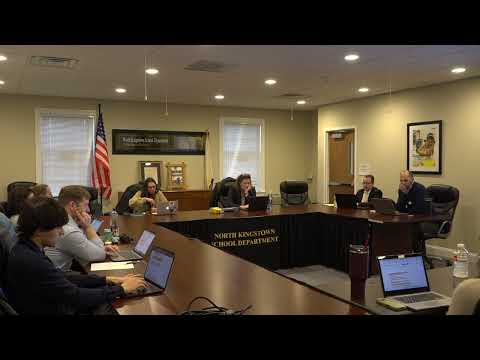
The advisory committee discussed an AI-use policy Feb. 12, urging a balanced approach that lets teachers harness AI as a learning tool while protecting academic integrity. Members said they favored principle-based guidelines to remain adaptable to rapid changes in AI tools and to avoid overly prescriptive bans that could quickly become obsolete.
Charles Poseyko, the district's IT supervisor, said the draft should provide guardrails while leaving assignment-level disclosure and enforcement to teachers and existing plagiarism frameworks. Members cited pilot programs and detection tools (for example, Turnitin) but noted detection is imperfect and that assignment design and teacher training are critical. The committee also flagged disclosure standards (students should know when AI use is allowed and how to cite it) and suggested leaning on existing responsible-use and academic-integrity policies rather than creating wholly new punitive mechanisms.
Committee members agreed to continue refining definitions (disallowed uses, permitted instructional uses), to review high-school pilot data, and to draft disclosure and academic-integrity language for the next meeting.