
Builders warn S.183 could have unintended consequences without code enforcement and licensing
Get AI-powered insights, summaries, and transcripts
Subscribe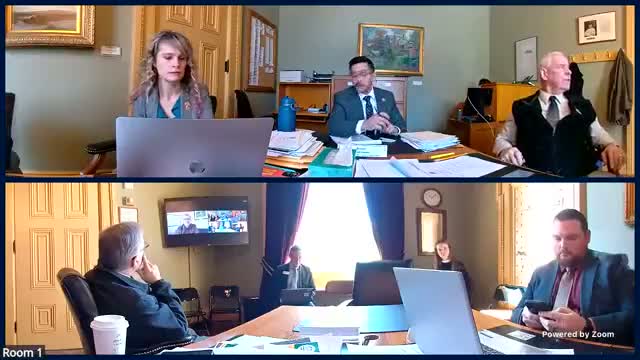
Summary
Testimony on S.183 focused on residential-construction regulation and criminal liability for contractors. Industry witnesses said Vermont lacks uniform building-code enforcement for single-family homes and urged careful drafting to avoid penalizing ordinary construction disputes.
The Senate Judiciary Committee on Feb. 13 heard testimony on S.183, a bill addressing contractor conduct and potential criminal liability for certain construction abuses.
Jason Webster, co-owner of Huntington Homes, testified that Vermont's single‑family residential construction operates with limited regulation and inconsistent enforcement. "We are basically an entirely unregulated industry," Webster said, arguing that courts often must adjudicate disputes rooted in differing expectations rather than clear wrongdoing.
Webster and builders said written contracts, change orders and project documentation frequently omit granular decisions made during construction, which complicates proving criminal intent. He recommended that any statutory standard tied to criminal liability require substantial damages or clear evidence of knowing intent, rather than being based on incomplete paperwork that commonly changes as projects evolve.
Committee members discussed options to protect consumers while avoiding unfairly penalizing honest contractors. Senators raised licensing, code adoption and enforcement gaps; witnesses noted that while electricians and plumbers face enforcement in commercial and multifamily projects, single‑family residential work often lacks permitting, inspections and consistent oversight.
Proponents of stronger enforcement urged that shifting some conduct from civil to criminal forum might give victims stronger remedies but also acknowledged the higher mens rea standard required for criminal prosecutions. The committee did not vote and indicated it would take the testimony under advisement while counsel refines language to avoid unintended consequences and preserve a path for legitimate prosecution where intent to defraud exists.
No vote on S.183 was taken; the committee signaled further drafting work is needed and that related policy discussions about licensing and code enforcement may be considered in other forums.