Get Full Government Meeting Transcripts, Videos, & Alerts Forever!
Get email alerts on the Land Use topic
No spam. Unsubscribe anytime.
Commission holds first reading on RV-storage ordinance; public asks for clarity on fees, affidavit and enforcement
Summary
A first-reading ordinance would revise recreational-vehicle rules (reduce permitted trailer length, allow side-yard storage with conditions, require $100 annual registration and an affidavit) and set penalties (first offense $250, subsequent $500); residents and staff asked for clearer language on affidavit, side-yard access and electrical connections.
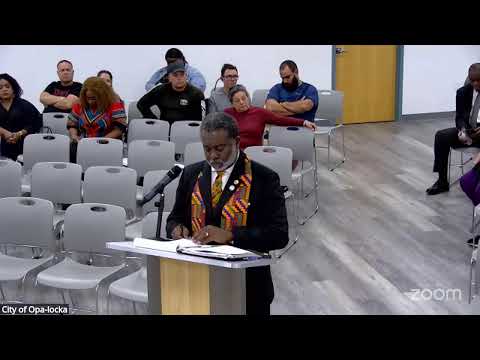
The commission held a public hearing on the first reading of an ordinance that would amend the city's land-development regulations on recreational-vehicle (RV) storage and parking. The proposal would, among other changes, reduce the maximum travel-trailer length from 40 to 35 feet, require registration and an affidavit that the RV will not be used for occupancy, allow a single RV on single-family property under defined conditions, and limit utility connections to short-term maintenance uses.
Commissioner Santiago, sponsor of the ordinance, said the amendments were developed over more than a year of workshops and are intended to allow lawful RV storage while preserving neighborhood character. "You're gonna have the privilege to park in your RV and your house legally by the book," Santiago said during the introduction, and he emphasized the measure would not permit living in the vehicles.
Several Spanish-speaking residents asked questions during the public hearing: whether the $100 fee is one-time or annual, what exactly the affidavit requires, how rules would apply for homes lacking side yards and whether penalties are applied per offense or cumulatively. One commenter asked whether the reduced fine in the text meant first offenses would be $250 rather than the prior $500.
Gregory Gay, the director of planning and community development, answered those questions: the affidavit is intended to verify that the RV is owned by the property owner or an authorized person; the first violation would be $250, with subsequent violations up to $500 per incident; the $100 registration fee is annual; and where no side yard exists an RV may be placed in the rear yard but not in the front. Gay also said an electrical extension cord would be permitted only for maintenance and ventilation—not for cooking or powering household appliances.
Commissioners asked staff to consider clearer, plain-language wording (one commissioner suggested using 'proof of ownership' instead of 'affidavit') and sought explicit definitions for enforcement and penalties. The item is at first reading; further review and a second reading will be scheduled before any ordinance is adopted.