Get Full Government Meeting Transcripts, Videos, & Alerts Forever!
Get email alerts on the Budget Priorities topic
No spam. Unsubscribe anytime.
Council task force frames six budget priority areas as Bloomington prepares for SB1-era uncertainty
Summary
A council-appointed budget task force proposed six outcome-focused priority areas (affordable housing and homelessness; high-performing government; economic development; public safety; transportation and mobility; community health and vitality) and recommended building a program inventory and software overlay to support priority-based budgeting.
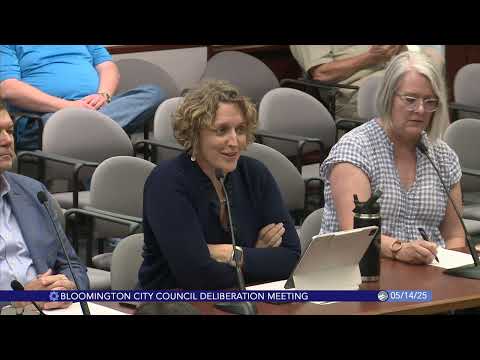
The Bloomington budget task force told the council on May 14 that it had identified six top-level outcome areas to guide the 2026 budget: affordable housing and homelessness; high-performing government (including equity and transparency measures); economic development; public safety; transportation and mobility; and community health and vitality.
Deputy Mayor Knapp and council task force members said the framework is intended to move the city toward outcome-based budgeting by creating a master program inventory and tagging programs in the city's budgeting software so the council and administration can see how funds are allocated across outcome areas. "We will create a document that sorts in, your priorities as well, and then ask [departments] to work with us to create what are our objectives," Deputy Mayor Knapp said.
The administration said the effort will use an overlay to the city's accounting software (New World) to produce reports that show how personnel and line items map to outcome areas and program-level spending. The controller noted that this first year will be "baby steps," with staff building the inventory and departments helping to identify tier-two objectives and attainable targets for the coming year.
Council members emphasized maintenance of core services and prudence in funding new large capital projects while the city assesses state and federal funding changes. The task force recommended that the administration work with department heads over the council recess and return with refined objectives and a report when council reconvenes (recess ends July 16).
Public comments during the meeting urged collaboration with county partners, attention to parks upkeep, staffing efficiency, downtown parking uses, and reconsideration of a $100,000 community composting line as a broader food-waste solution.
The council did not adopt final budget allocations at the meeting; instead, the task force and administration were directed to continue refining the inventory and proposed objectives for council review after recess.