Get Full Government Meeting Transcripts, Videos, & Alerts Forever!
Get email alerts on the Election Policy topic
No spam. Unsubscribe anytime.
Contested election measures split Wyoming Senate; hand-count ban fails while audit pilot advances
Summary
Senate File 108, which would have eliminated tabulating machines and required hand counts, failed introduction (9–22). A separate, narrower bill to pilot hand-count comparisons in 2026 (Senate File 113) passed introduction (29–2).
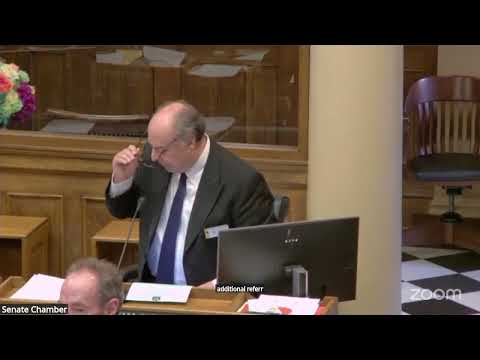
Election-related bills drew visible divisions on the Senate floor on Feb. 12.
Senator Larson introduced Senate File 108, a 51-page measure that would have removed the use of tabulating machines and required public hand counting of ballots statewide. Larson described years of local outreach and survey work and argued the change would “protect integrity and trust” in elections. The introductory roll call recorded 9 ayes and 22 no, and the bill failed introduction.
A different, narrower approach was advanced by Senator Crago in Senate File 113, described as a hand-count comparison and audit for the 2026 primary and general elections. That bill limits the review to two races selected by the Secretary of State (one federal and one statewide) plus all legislative races for 2026, and is framed as a pilot to identify problems within statutory timelines. The roll call recorded 29 ayes and 2 no; the bill was referred to Committee No. 7 (Corporations).
Sponsor remarks and direct quotes from the floor show the split in legislative approach: Larson said of his hand-count proposal, “Our state should be the first one to do that,” while Crago framed his bill as an implementable pilot that the clerks could operationalize in 2026.
Why it matters: The contrasting outcomes illustrate the chamber’s preference in this session for limited, testable election audits over an immediate, sweeping change to vote-counting methods. The bills will move to committee for hearings where clerks, county officials and the Secretary of State will likely provide operational testimony.