Lifetime Citizen Portal Access — AI Briefings, Alerts & Unlimited Follows
Committee narrows and advances bill to begin planning a Wyoming State Guard
Loading...
Summary
Senate File 67, which would remove a federal trigger and begin establishing a Wyoming State Guard and State Defense Council, was amended to focus on initial organization and a seed appropriation; the committee advanced the measure after hearing from the adjutant general.
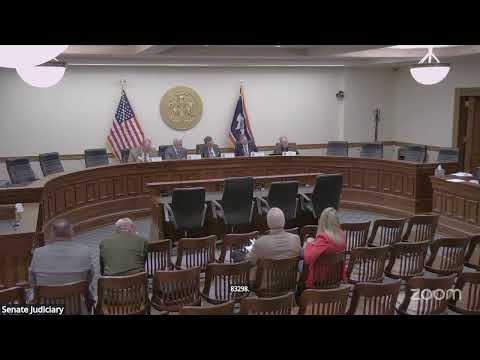
The Senate Judiciary Committee advanced a narrowed version of Senate File 67, a bill intended to modernize Wyoming's State Guard statute and authorize the establishment of a State Defense Council to study capabilities and implementation.
Sponsor Senator Dan Larson described the bill as clarifying separate statutes for the National Guard (Title 9) and the State Guard (Title 10) and removing the prior requirement that a National Guard activation be a prerequisite to organizing a state guard. He said the bill would allow the governor to organize and maintain a Wyoming State Guard and inserted constitutional language about preserving public peace and executing state law.
Major General Greg Porter, the state's Adjutant General, told the committee the State Guard would be entirely under the governor's authority and would not be federally controlled. He described the initiative as a planning exercise for a complex problem and supported a modest initial appropriation (the $25,000 figure in the bill) to establish the State Defense Council, acquire basic administrative tools and begin a 2–3 year process to define the guard's scope and resource needs.
Committee members expressed concerns about specific operational details (weapons, equipment, timeline, and overlap with federal equipment), statutory cross-references, and the absence of a broader interim study. In response, senators narrowed the bill to focus on establishing the council and initial organizational authority and left specific pay, arms and age provisions for later work. The amended bill passed committee on a roll call of 4 ayes and 1 no.
The committee record shows the next step is floor consideration and further work to define capabilities, fiscal needs and statutory alignment across state militia provisions.