UN envoy urges sustained support for Yemen peace process and calls for release of detained UN staff
Get AI-powered insights, summaries, and transcripts
SubscribeSummary
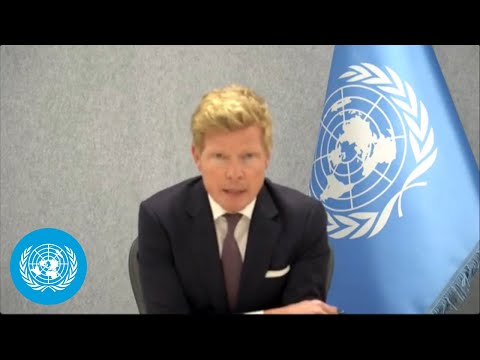
Hans Grundberg briefed the council from Riyadh, saying recent service gains in government areas are fragile and urging parties to finalize detainee lists being negotiated in Amman so families can be reunited at Eid; he demanded the unconditional release of detained UN staff.
Hans Grundberg, the United Nations special envoy for Yemen, told the council in a briefing from Riyadh that recent improvements in some government‑held areas are meaningful but fragile, and that a credible, UN‑facilitated political process is needed to make them durable.
"These are familiar themes for Yemenis," Grundberg said, describing more than a decade of conflict that has eroded institutions and fragmented authority. He said early signs in government areas include improved electricity and the payment of some public sector salaries, but warned that security incidents and demonstrations — including cases of violence and deaths — could reverse those gains.
Grundberg urged the parties and regional actors to support an inclusive process under United Nations auspices. He outlined three core reflections on the way forward: first, an honest appraisal of the damage caused by protracted war; second, recognition that political, economic and security files are interlocking and must be advanced in parallel; and third, that credible progress must deliver both near‑term relief and space for long‑term political agreements.
On the detainee file, Grundberg said the parties are negotiating in Amman, under UN auspices, to finalize the names required for a release operation that would build on an agreed outcome in Muscat in December. "With Eid approaching, the parties should work towards ensuring families can spend Eid with their loved ones," he said, urging swift implementation and fuller engagement across tracks.
Grundberg also highlighted concerns about detained UN staff and humanitarian workers. He said it has been one year since a World Food Programme colleague died while detained and that there has been no investigation into the circumstances. He reported that, as of the briefing, 73 United Nations colleagues and other former UN staff, along with members of civil society and diplomatic missions, remain detained and that some have been held incommunicado and referred to a special criminal court.
"I call on Ansarallah to unconditionally and immediately release detained staff and rescind all court referrals," Grundberg said, and he urged regional and international actors to use their influence to press for those outcomes. He thanked the Hashemite Kingdom of Jordan for hosting the Amman negotiations and the International Committee of the Red Cross for its role in detainee matters.
He welcomed the appointment of three women ministers to the new cabinet and encouraged the full, equal and meaningful inclusion of women at all levels of government and in peace negotiating teams. He described a planned Southern dialogue as an opportunity to address long‑standing grievances and to help pave the way for inclusive nationwide discussions.
Grundberg closed by urging restraint amid rising regional tensions and by asking the council to remain united behind a United Nations‑led path back to negotiations. "The United Nations remains ready to support Yemen in this endeavor," he said.