Get email alerts on the Child Safety topic
No spam. Unsubscribe anytime.
Committee adopts amendment and advances bill expanding mandatory-reporting duties
Summary
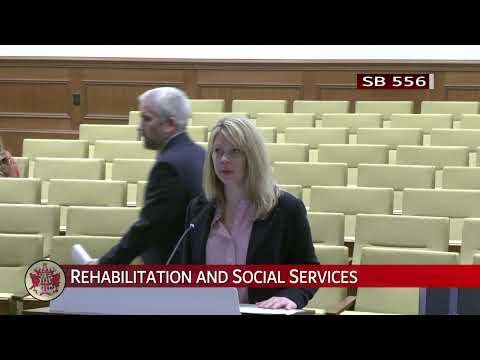
Senate Bill 556, which would broaden mandatory reporting obligations and clarify code citations related to sexual-offense reporting (including references to 18.2-374.3 in committee discussion), was amended verbally, adopted and reported 13–0.
Senate Bill 556 would expand mandated-reporter responsibilities to address modern contexts and reporting gaps identified by local prosecutors. Senator Perry introduced the bill, offered a verbal amendment to narrow a code citation to 18.2-374.3 (intended to target specific offenses involving minors), and explained two incidents motivating the change: an assistant coach allegedly soliciting illicit images from a minor and a private-school headmaster allowing a convicted sex offender on campus for years without reporting (SEG 702-733).
Senators discussed training for mandated reporters and whether athletic staff and directors are already covered; Senator Perry said existing language likely included such roles and the amendment was intended as "belts and suspenders" to make responsibilities explicit (SEG 771-778). The committee adopted the verbal amendment and reported the bill 13–0 (SEG 792-796). Sponsor and committee members noted the measure may need coordination with local schools and prosecutors but did not record a fiscal impact on the committee floor.
The bill advances with an adopted narrowing of the statutory reference; committee discussion emphasized training and clarity for people in athletics and school roles.
AI generated
The text on this page is AI generated. Summaries, highlights, analysis, and video transcripts are all produced from the original source material.
AI can make mistakes, so if you spot one, and we will fix it for everyone.
Note: the source content is unaltered by us. Any content source we link to, be it a video, an audio recording, or a document, is presented exactly as its publisher released it. That publisher is usually a government body, sometimes an individual official or another organisation.