Senate panel advances comprehensive cannabis marketplace substitute directing CCA-ABC merger, 17% tax rate and $15 million conversion fee
Loading...
Summary
A Senate committee approved a substitute for SB 542 that consolidates cannabis regulatory functions, sets a 17% tax, a $15 million conversion fee, and requires a plan to merge the Cannabis Control Authority into the Alcoholic Beverage Control Authority by Jan. 1, 2028; the committee also incorporated SB 826 into the measure.
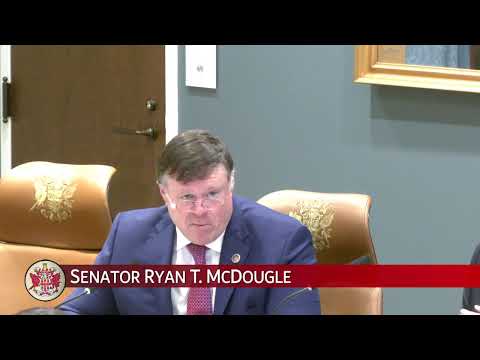
A Senate committee on the floor in Richmond approved a substitute for SB 542 that would reshape Virginia’s cannabis marketplace regulation, set a 17% tax rate and require a $15 million conversion fee to fund transition costs.
The sponsor moved to adopt the committee substitute, which staff said tightens application and background-check language, aligns medical and retail labeling and packaging, and adds subsections addressing banking and a general prohibition on certain internet sales. Katie, a committee staffer, explained an enactment clause directing that no later than Jan. 1, 2028, the Cannabis Control Authority (CCA) become a division of the Alcoholic Beverage Control (ABC) Authority to form a combined Alcoholic Beverage Cannabis Control Authority. The substitute preserves the CCA’s policy-board role while ABC is assigned primary enforcement duties during and after the transition, and requires a joint implementation plan to the Joint Cannabis Commission by Nov. 1, 2026.
The substitute retains revenue allocations outlined in related proposals: 40% of marijuana tax and fee revenue for early childhood education and 30% to a Cannabis Equity Reinvestment Fund. Committee staff attributed the 17% tax rate and the $15 million conversion fee to provisions originating in Senator Lucas’s introduced bill. The sponsor also moved to incorporate SB 826 into SB 542; the committee approved the incorporation and then voted to recommend the substitute for reporting out of the committee.
The committee’s action was procedural approval to advance the substitute; it did not, in this hearing, set final statutory text beyond the substitute or finalize implementation details. The substitute specifies roles during the interim period: CCA handles licensing and regulation, ABC serves as the primary enforcement agency, and both agencies must coordinate enforcement functions. The panel approved the measure by voice vote.
Next steps: the reported substitute will proceed through the legislative process, where additional floor action, amendments, or fiscal analysis could change tax, fee, or structural provisions before final enactment.