Get Full Government Meeting Transcripts, Videos, & Alerts Forever!
Get email alerts on the Signs topic
No spam. Unsubscribe anytime.
Saint Helena planning commission approves major sign permit for Royal We Wines at 929 Main Street
Summary
The Planning Commission approved a major sign permit legalizing two wall signs for Royal We Wines at 929 Main Street, finding the project exempt from CEQA. Commissioners questioned precedent and nonconforming nearby signs but voted to accept staff findings.
The Saint Helena Planning Commission on Jan. 20 voted to approve a major sign permit for Royal We Wines at 929 Main Street, legalizing two wall-mounted signs a business had already installed in part.
Staff described the primary sign as a non-illuminated set of individual aluminum letters measuring about 48.5 square feet and 25.9 feet long, mounted 12 feet above grade, and a secondary multi-panel sign of roughly 30.45 square feet mounted at about 7.5 feet. Because the total area exceeded objective standards in the municipal code (Saint Helena Municipal Code chapter 17.27), the application required discretionary approval through a major sign permit. Staff recommended approval and concluded the project is exempt from the California Environmental Quality Act under CEQA Guidelines section 15311 (Class 11) for on-premise signs.
Commissioners raised concerns about two points in the staff presentation: whether the sign contributes to the historical or architectural character required by the findings and whether the presence of nearby, larger signs (referenced in the staff report as Gotts Roadside and Nimbus Arts) creates a precedent. Senior planner Jackie O'Neil told commissioners staff could not locate records showing those nearby signs had been approved through a major sign permit or discretionary process, and that each application must be evaluated on current code standards.
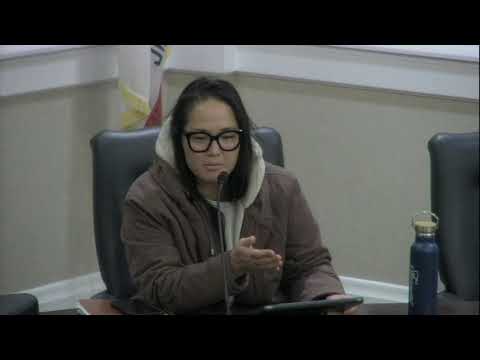
Thomas Rivers Brown, identified himself as the applicant representative and said his business put up the smaller sign without realizing a permit was required and that the larger primary sign size was chosen to be in scale with the long building façade. "We put the secondary sign up, not knowing that we needed a permit for it, but basically just as a way to mark the building to make sure people knew they were in the right place when they came for a tasting," Brown said.
After questions and discussion, a commissioner moved to accept the staff recommendation and the commission approved the major sign permit by roll call (Vice Chair Furdick — yes; Commissioner Covell — yes; Chair Warner — yes). The commission discussed adding presentation slides and related materials to the meeting record so future reviewers can see late-filed presentation material.
The planning commission did not authorize any illumination (the signs are non-illuminated) and left in place standard conditions required in the staff report. The applicant will proceed under the conditions of approval attached to the resolution.