Get Full Government Meeting Transcripts, Videos, & Alerts Forever!
Get email alerts on the Disaster Recovery topic
No spam. Unsubscribe anytime.
County presents $429M storm damage overview and proposes retention fund as FEMA rules shift
Summary
Budget staff and FEMA consultants showed aggregated storm damages near $429 million across six disasters, described delays and eligibility risks in FEMA processing, and proposed a retention fund plus insurance strategies (parametric, asset-class) to manage cash-flow and policy uncertainty.
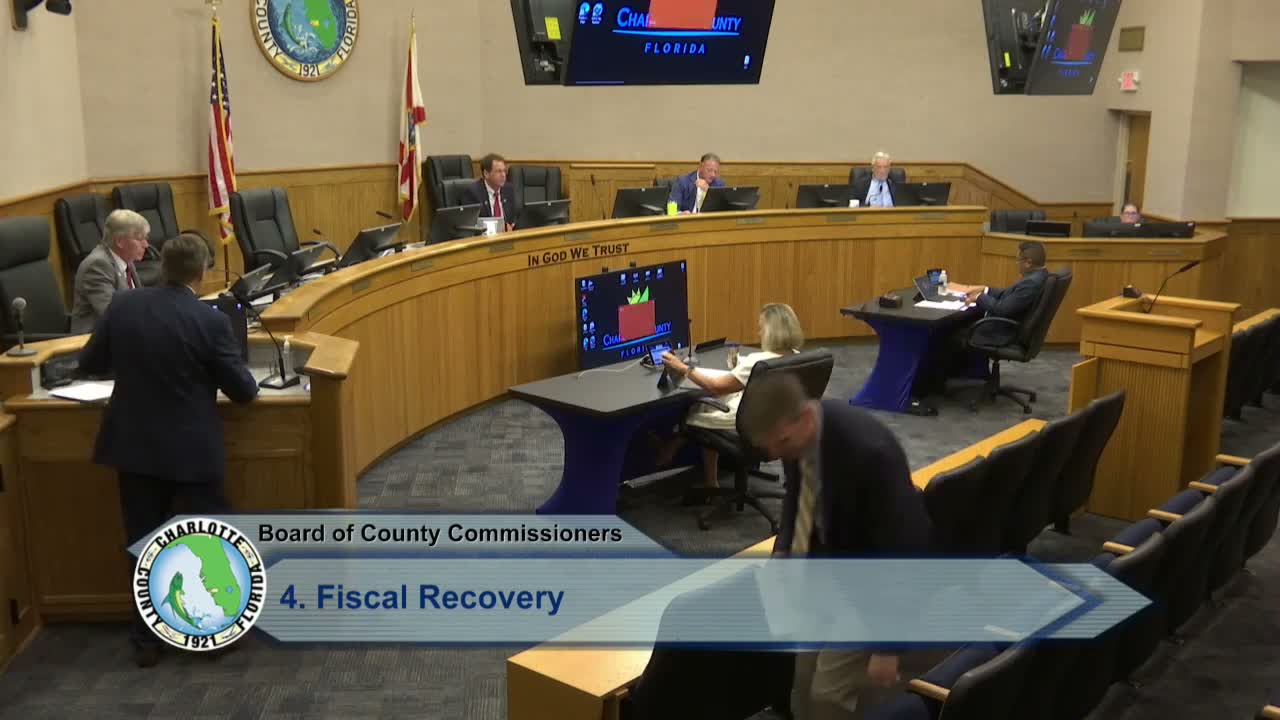
Gordon Berger, director of budget and administrative services, and Chris Billman of CSA Consulting gave an extended briefing on the county’s fiscal recovery from multiple storms, insurance activity and possible changes in FEMA policy.
Berger presented a consolidated overview that aggregated open disaster claims across six declared events and cited a working total near $429,000,000 in gross damages; he said those totals are expected to be refined downward as FEMA and the county reconcile individual projects. ‘‘If you look at this and... the number of open disasters there, 6 open disasters, tried to group those by each category…we’re looking at $429,000,000 total,’’ Berger said.
Chris Billman explained FEMA’s program categories (A–G and Z), the multi-step intake and eligibility review process, and common sources of delay — including subjective eligibility questions (for example, whether a facility was “regularly maintained”), FEMA personnel turnover and duplicated field reviews. Billman noted SB4A and other state programs can pick up portions of the local share for some storms but said federal policy proposals under review may change eligibility and cost shares.
On insurance, Berger reported roughly $52,000,000 in projected insurance recoveries with an effective named‑storm deductible structure that changed recently; the county previously reduced deductible exposure but rising premiums forced adjustments. He said the county has about $226,000,000 in costs running through county books so far, has received reimbursements that reduce the net exposure, and currently carries a working shortfall in the order of $95,000,000 while reimbursements are processed.
Billman and Berger identified three high‑priority coastal park projects (Inglewood Beach, Port Charlotte Beach, Bayshore Live Oak) currently in FEMA eligibility review and estimated those three alone could account for roughly $26,000,000 of FEMA project work in process.
To manage risk and cash‑flow uncertainty, Berger proposed establishing a retention fund — a designated portion of reserves or a self‑insurance retention — to pay hurricane‑related costs that may not be reimbursed under changing federal policy. He briefed commissioners on alternative risk structures, including parametric insurance and targeted asset‑class coverage (e.g., treating generators separately from building schedules), and said staff will bring options and pricing back to the board.
Commissioners discussed timing, the potential impacts of FEMA policy changes on county reserves, and asked for public‑facing monthly PDFs that show paid vs. unpaid sums. Berger said staff will prepare periodic updates and options for reserve or retention‑fund policy changes and will pursue insurance quotes for parametric and other coverage options.
No board action was taken; commissioners asked staff to return with refined numbers and proposed reserve/insurance options for future consideration.