Get Full Government Meeting Transcripts, Videos, & Alerts Forever!
Get email alerts on the Micromobility topic
No spam. Unsubscribe anytime.
Local law enforcement and FDOT urge education, ordinances as e-bikes outpace rules
Summary
Charlotte County officials heard FDOT and sheriff's office presentations on e-bikes and micromobility, including enforcement limits for devices exceeding statutory classes, sidewalk use allowances, and local ordinance options to address high‑speed electrically powered bikes.
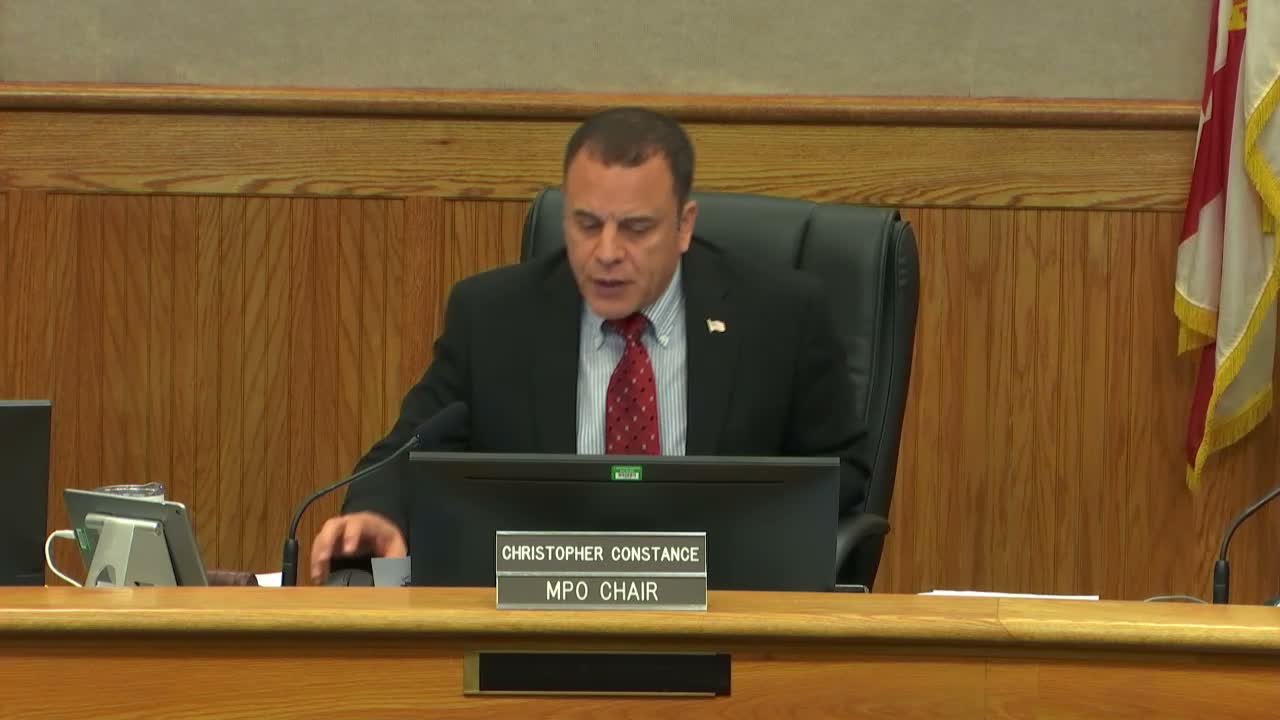
At the Aug. 4 MPO meeting, Charlotte County law enforcement and FDOT officials told board members that rapidly advancing e‑bike and micromobility technology is outpacing existing rules and design guidance, and urged local action on education and possible ordinances.
Sergeant Paley of the Charlotte County Sheriff’s Office summarized how Florida law defines three e‑bike classes: Class 1 (pedal‑assist, capped at 20 mph), Class 2 (throttle‑assisted, capped at 20 mph), and Class 3 (pedal‑assist, up to 28 mph). He said devices that exceed those definitions can fall into a legal “motor vehicle” category, which creates enforcement and registration challenges. “We are seeing plenty of devices that will exceed all of these top speeds,” Paley said, noting officers encounter vehicles that behave like motorcycles but are often unregistered and not certificated by DMV standards.
Paley explained local practice: Charlotte County currently allows bicycles, including qualifying e‑bikes, on sidewalks in many areas (with specific exceptions such as the Pioneer Trail in Englewood). However, he and FDOT safety staff warned that silent, high‑speed devices can put pedestrians at risk and are difficult to enforce without clearer local rules.
FDOT District 1 safety administrator Dr. Keith Robbins framed the issue within a broader traffic‑safety culture message: behavior is the primary safety risk and new vehicle types complicate expectations for both motorists and vulnerable users. He noted Charlotte County recorded a decline in 2024 with six fewer fatalities and 53 fewer serious injuries and recommended community outreach and multi‑agency partnerships to change behavior.
Board members asked how design standards and enforcement should adapt. FDOT representatives said standard sidewalks are not designed for high speeds and that pathways are generally designed for a 20 mph design speed; they recommended local ordinances and coordinated public education as the mechanism for additional restrictions or identification requirements. Several board members pressed staff to explore ordinances that could restrict motorized sidewalk use or require licensing/training for operators of devices that exceed statutory speed classes.
No formal action was taken; staff were asked to research local ordinance options and to continue public education efforts.