Long Beach council directs wider distribution and workforce analysis after Black community health assessment
Loading...
Summary
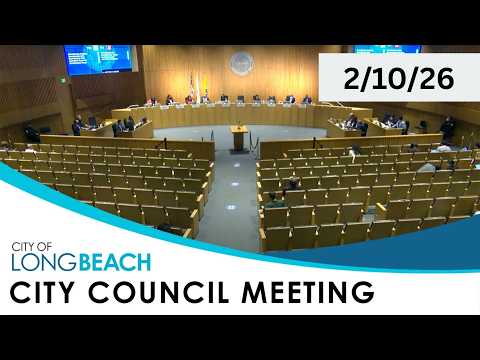
The City Council voted Feb. 10 to direct the Health & Human Services Department to present the Black Community Health Strengths and Needs Assessment to partner agencies by Dec. 31, 2026, and to compile an internal workforce analysis to identify "employment deserts" and policy recommendations within 120 days.
Mayor Rex Richardson and the Long Beach City Council on Feb. 10 unanimously approved a motion to move the Black Community Health Strengths and Needs Assessment from study into action, directing staff to share the report with local partner agencies and to analyze city workforce data with targeted policy recommendations.
Council member Thrash Ntuk, who introduced the item, said the assessment "offered a comprehensive community-informed look at the lived experiences, priorities, and strengths of Black residents" and that the item was meant to convert those findings into accountable, time-bound steps. The motion requires Health & Human Services to present the assessment to governing bodies at partner agencies — including Long Beach Unified School District, Long Beach City College, Long Beach Transit, the Port of Long Beach and Long Beach Airport — by Dec. 31, 2026, and to complete a city workforce analysis and report back with concrete recruitment and outreach measures within 120 days.
The assessment, Thrash Ntuk said, drew participation from more than 600 residents and about 300 survey respondents. Staff summarized several headline findings: economic insecurity, mental-health distress, housing instability and gaps in resource access. "Over 54 percent of respondents reported being employed, more than a third reported working multiple jobs just to make ends meet," she said, adding that a quarter of respondents had been unable to afford rent in the prior month and that Black residents, who make up roughly 12 percent of Long Beach's population, represent approximately one-third of residents experiencing homelessness.
During public comment, community leaders and advocates urged quick implementation and clear outcome measures. "If this is carried out as intended, residents should see concrete outcomes — job fairs in underserved areas, targeted recruitment, partnerships with community colleges and regular public reporting," said Carolyn Essex of the Coalition for a Just and Equitable California.
Council members framed the motion as both an external and internal accountability measure: externally, to ensure partner agencies use the findings to align programs; internally, to examine hiring, representation and leadership within city employment and to flag "employment deserts" where residents face barriers to municipal jobs. The motion passed unanimously. Staff will return with summaries after each partner presentation and the requested workforce analysis and recommendations.
Next steps: The health department will coordinate presentations to partner governing bodies by the end of 2026 and return to the council with the workforce analysis and policy recommendations within the 120-day timeframe specified in the motion.