Get Full Government Meeting Transcripts, Videos, & Alerts Forever!
Get email alerts on the Land Use topic
No spam. Unsubscribe anytime.
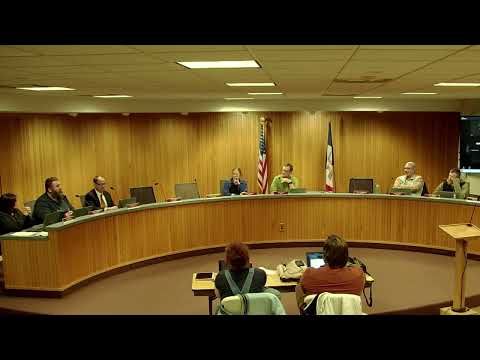
Council sets Feb. 16 hearing on zoning changes to enable ADUs and debates HVAC screening rules
Summary
The council set a public hearing for Feb. 16 on amendments to Title 17 to reduce front-yard setbacks to 10 feet, rear setbacks to 5 feet, and introduce lot-coverage limits (R-2: 50%, R-3: 75%) to comply with state ADU laws; members engaged in a lengthy discussion about whether to add objective HVAC placement or screening rules and asked staff and the Planning & Zoning Commission to develop administrable options.
The Decorah City Council voted to set a public hearing for Feb. 16 to consider proposed zoning code changes intended to restore local compliance with state rules on accessory dwelling units (ADUs) and to provide greater flexibility for property owners.
Travis, the city staff presenter, said the state legislature’s changes required ADUs to be built under the same zoning requirements as principal structures, effectively making detached ADUs difficult to build under Decorah’s existing code. The proposed local amendments would reduce front-yard setbacks to 10 feet from the right of way and rear setbacks to 5 feet, and add maximum lot-coverage limits: 50% for R-2 zoning and 75% for R-3 zoning. Staff explained the coverage percentages using a 2,000-square-foot example to show how a principal structure plus accessory buildings and an ADU could fit on typical lots.
Council members asked a range of technical questions and raised a recurring constituent concern: loud HVAC equipment placed adjacent to neighbors’ windows. Some members urged the council to add an objective code mechanism—such as a fixed distance requirement, decibel-based threshold, or a mandatory screening trigger—while others cautioned that any new rule must be objectively enforceable and administrable. Travis and other staff advised that objective criteria or a site-plan trigger that empowers the zoning administrator to require screening may be a workable path forward and suggested referring detailed standards to the Planning and Zoning Commission for additional research and specific language.
Chisel moved to set the hearing for Feb. 16; Bergen seconded, and the motion passed on roll call.
The proposed ordinance would be considered for first reading at the Feb. 16 meeting following the public hearing. Technical details (exact screening materials, decibel thresholds, or fixed distances) were not decided at this meeting; council members asked staff and Planning and Zoning to craft objective, administrable language for future consideration.
Next steps: Planning and Zoning and staff will prepare specific code language or alternatives (e.g., screening requirement tied to proximity thresholds or site-plan review triggers) for public hearing and first consideration in February.