
Committee refines H.549 to speed IDs for people leaving custody, delays detainee expansion
Get AI-powered insights, summaries, and transcripts
Subscribe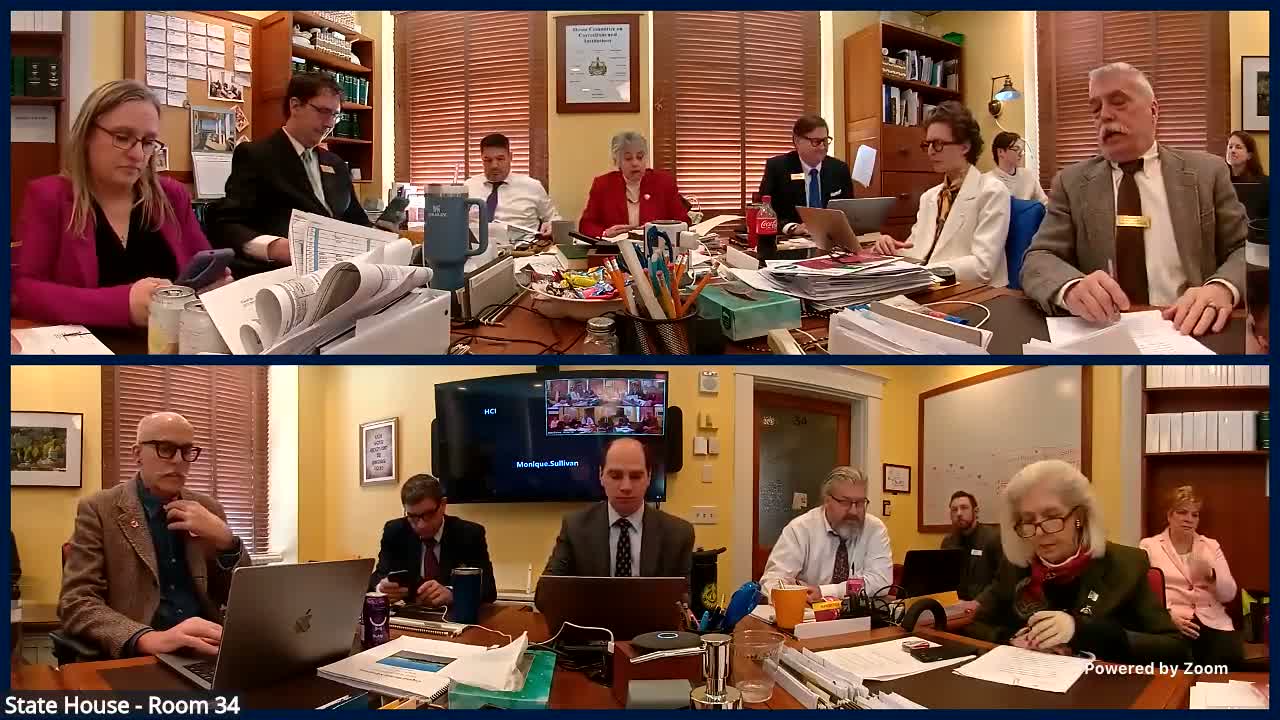
Summary
The House Corrections & Institutions committee agreed to tighten H.549’s language so DOC and DMV coordinate to provide non‑driver IDs and, when eligible, driver credentials to people leaving custody; members removed detainees from the immediate expansion for logistical and IT reasons and asked counsel to redraft.
The House Corrections & Institutions committee on Friday moved to refine draft language for H.549 so the Department of Corrections (DOC) and the Department of Motor Vehicles (DMV) can better coordinate issuance of identification for people leaving custody.
Legislative counsel Damon Leonard told the committee the DMV proposal would “expand the existing program that DOC and DMV have, which allows a person who’s been sentenced to receive a non‑driver identification card” so that, in some circumstances, people could leave custody with a driver’s license or learner’s permit instead of having to get a separate credential after release. He added the initial draft “inadvertently swept in detainees,” language counsel has since clarified to focus on sentenced individuals.
DMV director-level staff (identified in the hearing as Nancy Prescott) explained the difference between Real ID‑compliant credentials and non‑Real ID identification and summarized documentation rules. “The identifications that you need to provide is residency, Social Security, as well as a certified birth certificate or valid passport,” Prescott said when listing documents necessary for a Real ID credential; she confirmed that a non‑Real ID non‑driver card requires proof of residency and a Social Security number but not citizenship documentation.
Monique Sullivan, DOC facility operations manager, described the DOC practice for preparing materials: DOC can provide Social Security cards and Vermont birth certificates for inmates born in Vermont and said the agency can create a form letter stating incarceration dates and an approved release address to support residency verification. “We ask the individual which kind of ID they would like, and then the documents that we are able to get are a Social Security card and a birth certificate if the person was born in Vermont,” Sullivan said.
Members pressed several policy details. The current draft allows a person whose Vermont operator license expired no more than three years earlier to apply for a replacement credential while incarcerated; counsel recommended tightening the text to make clear renewals are provided in advance of release (for example, within a pre‑release window) to avoid mid‑sentence renewals that later lapse because federal photo‑update rules require an in‑person photo every nine years.
On cost and credential level, DMV staff said replacement operator’s licenses issued in advance of release could be provided with a $0 fee under the draft, but some required documents (such as out‑of‑state certified birth certificates) may create costs that fall on individuals. DMV staff also said enhanced border‑crossing credentials include an extra $30 fee and are not part of the no‑charge plan.
The committee discussed whether to include detainees (people held pre‑adjudication) in the expansion. Members raised logistical concerns — detainees can be released directly from court before DOC can prepare documents — and several said that operational differences argue for a separate subsection. DMV staff asked that any detainee provisions not take immediate effect so the agency can update IT and administrative processes; DMV requested a delayed effective date for detainee changes (DMV suggested 01/01/2027) while other parts of the bill could take effect earlier.
Committee members instructed counsel to draft cleaner statutory language that: (1) limits prescriptive operational detail in statute while requiring DOC and DMV to reach an agreement or MOU on process; (2) carries Real ID/non‑Real ID documentation language where it matters; and (3) creates a distinct subsection to address detainees if desired. Counsel said they would revise the language and refile a draft for review; the committee is scheduled to reconvene Tuesday the seventeenth.
The committee took no formal votes during the session.