
Elgin council delays vote on single‑use plastic bag ordinance after heated debate, business outreach concerns
Get AI-powered insights, summaries, and transcripts
Subscribe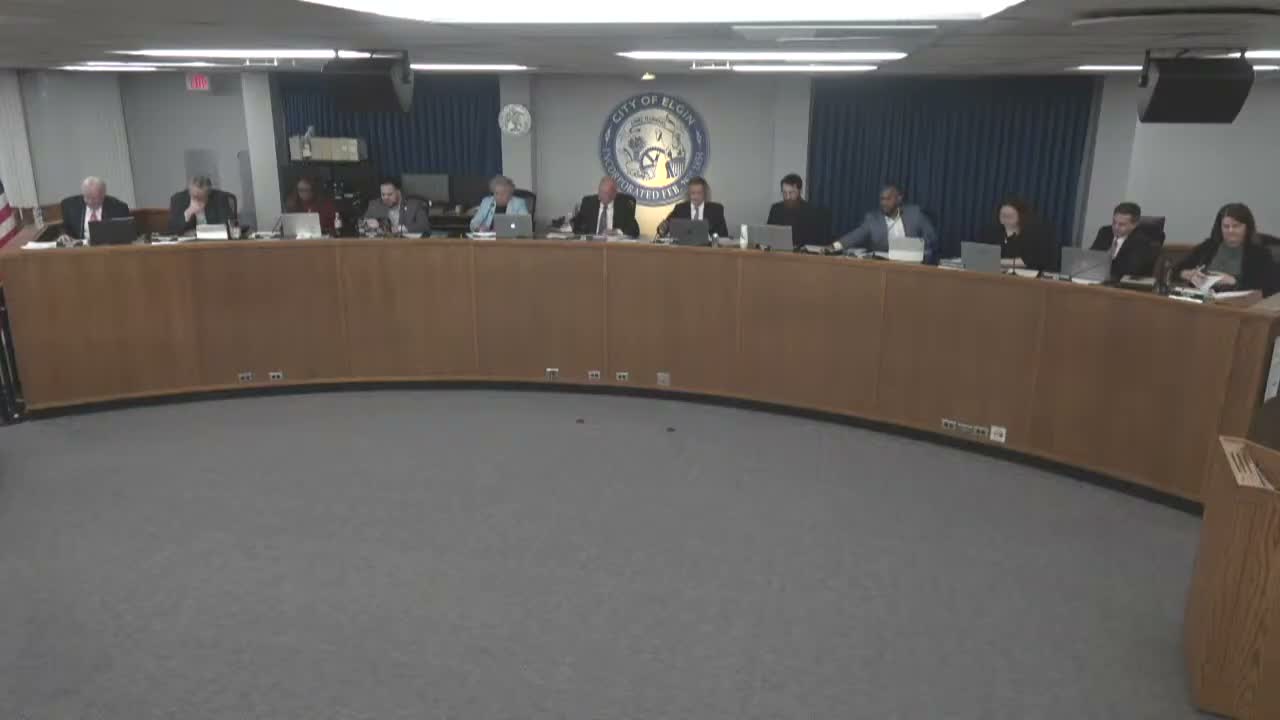
Summary
After staff presented outreach showing 2,185 survey responses (57% opposed), the Elgin City Council voted 6–3 on Feb. 11 to postpone action on a proposed single‑use plastic bag ordinance to Feb. 25 to give retailers more opportunity to respond and to refine policy details.
Elgin — The City of Elgin’s Committee of the Whole on Feb. 11 delayed consideration of a proposed ordinance that would ban single‑use plastic checkout bags and impose a fee on paper bags, voting 6–3 to move the item to the Feb. 25 council meeting.
Sustainability staff framed the proposal as a policy option aligned with the city’s climate action goals and modeled on state legislation discussed in Springfield. Kristen Ifner, the city’s sustainability manager, told the council the draft ordinance would apply to most retail stores in Elgin, exempt restaurants, gas stations and very small retailers, allow customers to bring reusable bags and exempt WIC and SNAP participants from the fee. “We recommend an effective date in 2027 to allow retailers and the community time to prepare,” Ifner said.
Jessica Van Dyke, the city’s sustainability coordinator, summarized outreach results: 2,185 survey responses, 57% opposed and 38% supportive, and eight in‑person outreach events. Van Dyke emphasized the survey was not a statistically representative sample and said open comments raised recurring themes around cost, equity, effectiveness and implementation logistics. “Many respondents said they might consider shopping outside Elgin if restrictions were implemented,” she said, adding that was reported as anecdotal feedback from comments and in‑person conversations.
Tony Lysenko of the Elgin Development Group told the council he had personally contacted dozens of retailers and coordinated outreach; he said many businesses were strongly opposed and asked that the council defer action so national chains and other affected managers could attend. Lysenko warned some retailers that had faced similar ordinances elsewhere reported significant business loss to neighboring communities.
Council members were sharply divided. Council member Stephen Thorne moved to postpone discussion for two weeks to allow affected retailers to appear; the motion was seconded and supported by members who said a brief delay would permit more robust participation from businesses that could not attend the Feb. 11 meeting. “It’s appropriate that people most impacted have a chance to attend,” the mayor said when putting the motion to a vote.
Council members opposed to the postponement, including Council member Steffen, said they would prefer to act immediately and noted the ordinance would return to a regular council meeting for final approval in any case. Supporters of moving forward now pointed to environmental and public‑health research about microplastics and urged leadership at the city level. “This is one of those hard things we got elected for,” Council member Powell said.
The council voted 6–3 to postpone the item to Feb. 25. Council discussion included a proposal to send a unified letter to state legislators urging statewide action so that local businesses would not face inconsistent rules across jurisdictions.
Next steps: Staff will continue outreach and refine the ordinance language and implementation plan, including exemptions, retailer verification, and an education and enforcement budget estimated at about $18,000 for the first year. The item is scheduled to return to the council’s Feb. 25 agenda.