Get Full Government Meeting Transcripts, Videos, & Alerts Forever!
Get email alerts on the Tsunami Warning topic
No spam. Unsubscribe anytime.
Crescent City officials urge evacuation of low-lying areas after Pacific-wide tsunami warning
Summary
Local, state and National Weather Service officials warned residents to avoid beaches, harbors and the Elk Creek lowlands after an 8.8 magnitude quake near Russia generated a tsunami forecasted to bring 3–5 foot surges beginning around 11:50 p.m.; officials said activity could continue about 30 hours.
Crescent City officials on Friday night urged residents in low-lying neighborhoods and along the harbor to move to higher ground after a distant 8.8 magnitude earthquake near eastern Russia produced a Pacific-wide tsunami threat. National Weather Service forecasters said the first local wave was expected around 11:50 p.m., with subsequent waves possible through roughly 30 hours of activity.
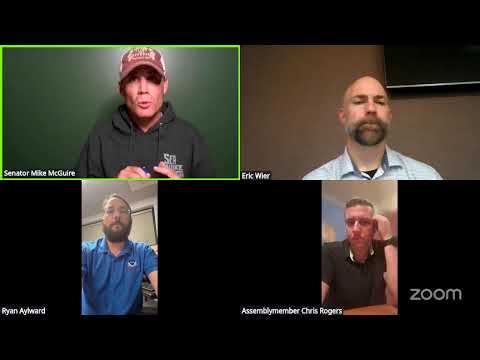
"The first wave is expected to arrive at 11:50," said Ryan Allward, a warning coordination meteorologist with the National Weather Service, describing forecasts that show waves of about 2.5 up to nearly 5 feet. He cautioned that "the first wave is not often the biggest" and urged residents not to rely on visual cues: "Don't trust your eyes."
City Manager Eric Weir identified the Elk Creek area, the harbor and South Beach as the lowest and most at-risk parts of Crescent City and said the city had asked residents at Lighthouse Cove RV Park to evacuate. "If we're going to have flooding that's beyond our normal high tide... this area is going to be dangerous," Weir said, advising those in vulnerable locations to leave and not return until officials declare it safe.
Officials asked people with RVs to use three authorized staging locations overnight: Home Depot, Walmart and Del Norte High School parking lots. Boat owners were urged to remove vessels from the harbor and seek open water; Weir said the harbor master, Mike Rademacher, had contacted boat owners to encourage that action. State and local emergency managers said they stood ready to provide support; Assemblymember Chris Rogers said state Office of Emergency Services and other agencies were coordinating resources.
Forecasters noted local tide timing raises risk: Crescent City was at low tide when the briefing began, but the next high tide, around 3:00–3:30 a.m., could coincide with larger tsunami waves. "If everything lines up and our tsunami wave ends up being 5 feet at around that time, you could see the waves exceeding the high tide line and flooding some of the low-lying areas," Allward said.
Officials repeatedly warned residents to stay away from beaches, river mouths and the harbor for about 30 hours while the National Weather Service monitors wave heights and considers downgrading the warning. The NWS said it would downgrade a warning to an advisory after three consecutive hours below 3 feet and would cancel alerts once wave heights remain below 1 foot.
City leaders closed the briefing by asking neighbors to check on each other and to follow official Crescent City channels for updates; they said they would return with more information overnight if conditions warrant.