
Kodiak Island Borough reviews regional solid waste plan as residents press for more public input and reject incineration
Get AI-powered insights, summaries, and transcripts
Subscribe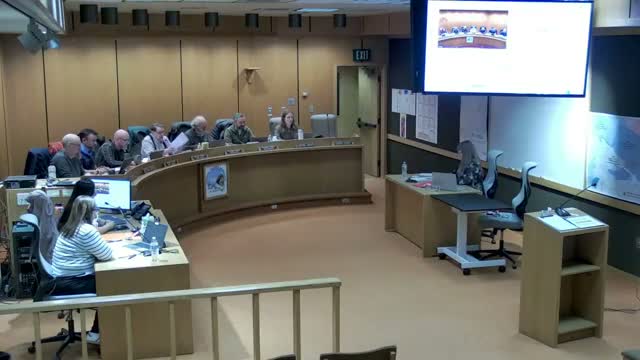
Summary
The borough heard a presentation of an updated regional solid waste management plan funded by a Denali Commission grant; Jacobs staff said incineration produced the lowest 30‑year cost in their model, but residents and several Assembly members urged more public comment and raised concerns about air emissions, toxic ash and the plan’s economic assumptions.
The Kodiak Island Borough Assembly on Feb. 12 heard a presentation on an updated regional solid waste management plan and public comments urging a longer comment period and reconsideration of incineration.
Aaron Oswald, a longtime Kodiak resident, told the Assembly he had reviewed the draft and "formally request[ed] that the public have an ability to comment on this plan," saying the economic models contain "numbers that aren't supported by anything in the report" and that key cost comparisons were buried in the appendices.
The plan, developed with Jacobs and funded by a Denali Commission grant, reviews four long‑term disposal options for the road system: continued landfilling, incineration (two diesel‑fired units with pollution controls), export of bailed waste to a Lower‑48 landfill, and an aggressive diversion strategy emphasizing composting and recycling. Jacobs project manager Corey Hines told the Assembly that, in the firm's 30‑year present‑value comparison, "the incineration option is the lowest 30 year present value and the lowest levelized tipping fee," and recommended the borough consider replacing the baler with an incineration system while conducting further due diligence.
Patricia Williams, the borough manager, emphasized that the project was grant‑funded and "is just meant to be educational. It doesn't need to be approved," adding that staff and the Solid Waste Contract Committee will use the plan to inform a forthcoming request for proposals.
Speakers from the public and members of the Solid Waste Advisory Board pushed back. Marion Owen said she was "not in favor of incineration," citing toxic ash, the potential to undermine recycling and composting, and recommended source reduction and expanded diversion programs. Assembly members raised follow‑up questions about whether construction and demolition debris could be combusted (Jacobs said separation is possible but adds complexity) and about the scale and cost of air pollution controls. Assembly member Whiteside noted the potential for neighborhood impacts from stack emissions and said sophisticated controls would be required.
The plan also lays out eight diversion initiatives such as increased outreach, illegal‑dumping enforcement, organics diversion and composting, cardboard and aluminum recycling bans for the road system, scrap‑metal backhaul events for villages, glass reuse for landfill cover, fishnet recycling partnerships, and advocating for a statewide bottle‑bill. Jacobs staff recommended updating the plan and waste composition studies every five years and tracking diversion metrics annually.
Next steps identified at the meeting include additional community engagement, a detailed review of Jacobs’ modeling assumptions, outreach to other municipalities for operational due diligence, and further work by the Solid Waste Contract Committee. Staff noted the borough recently passed a solid waste code and that an RFP for services is in development.
The Assembly did not take formal action on the plan during the Feb. 12 work session; presenters and staff will return for further discussion and follow‑up materials requested by the Assembly and members of the public.