
Lawmakers hear how December 2025 atmospheric rivers battered Washington farms and pushed request for disaster declaration
Get AI-powered insights, summaries, and transcripts
Subscribe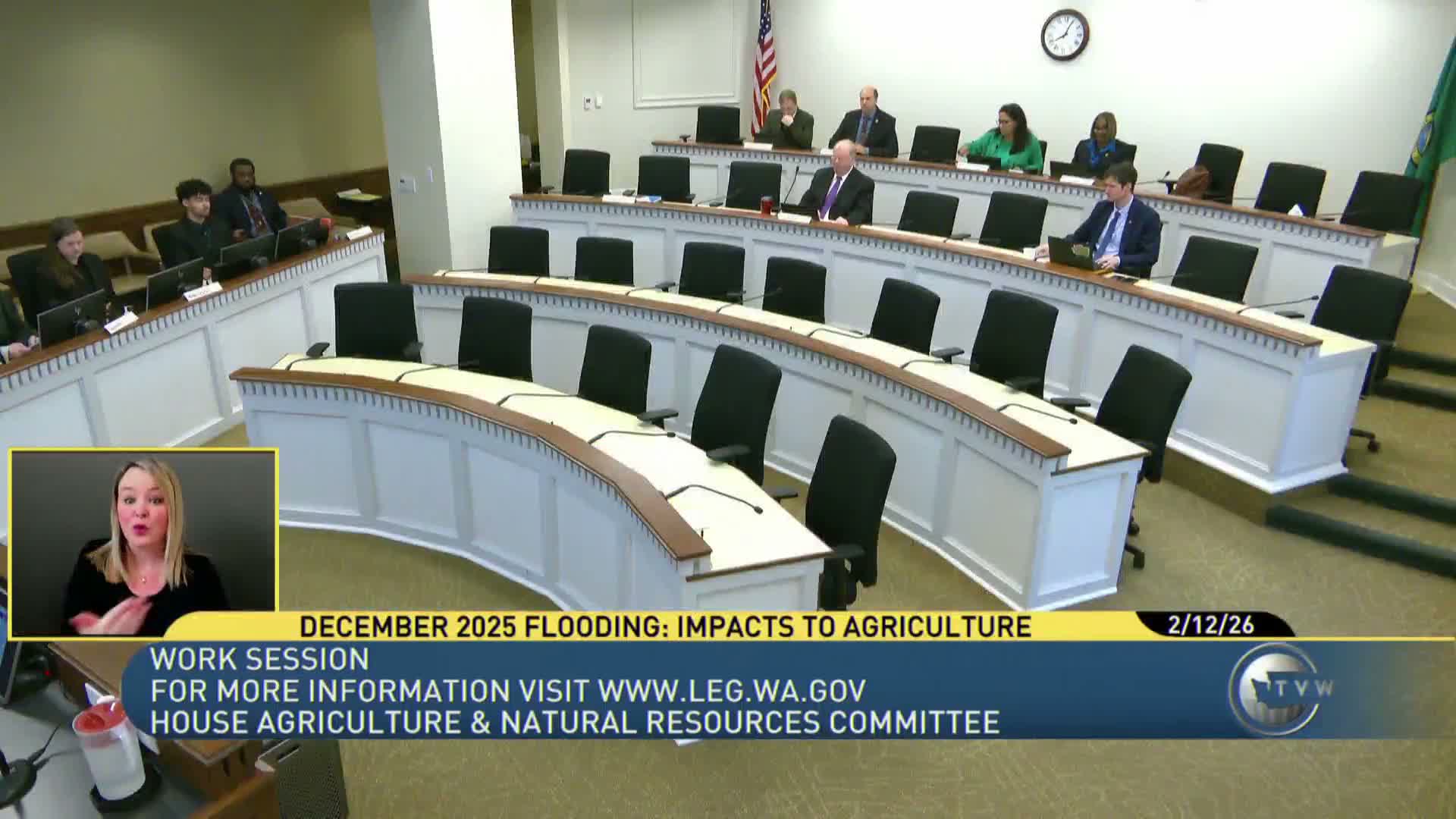
Summary
State emergency managers, county officials and agriculture agencies told the House Agriculture and Natural Resources Committee on Feb. 12 that December 2025 atmospheric rivers caused record flooding across river basins, damaged infrastructure and crops, and created gaps in federal programs for small and specialty farms; they urged state contingency funding and an improved ag damage‑assessment tool.
State and local emergency officials told the House Agriculture and Natural Resources Committee on Feb. 12 that the December 2025 series of atmospheric rivers produced historic flood and wind damage that hit many of Washington’s agricultural communities and could require both federal and state recovery aid.
Robert Ezell, director of the Emergency Management Division at the Washington Military Department, said the storms dropped between "20 and 40 inches of rain," three to six times normal for the period, leaving 33 rivers in flood, 18 above major flood stage and three — the Skagit, Snohomish and Cedar — exceeding record levels. He said roughly 4,000 homes were affected (about 440 with major damage or destroyed), at least 75,000 residents were placed under evacuation orders at one point, there was one fatality, "380 successful rescues" and about 1,000 assisted evacuations. Ezell told the committee his agency’s preliminary FEMA‑eligible damage estimate is approximately $180,000,000 and the administration is preparing a request for a federal major disaster declaration to submit before Feb. 18.
Ezell described the standard federal request path — state governor proclamation, submission to FEMA Region 10, review at FEMA headquarters and a presidential determination — and cautioned that a lapse or slowdown in federal departments would slow processing: "it's going to slow down the process and then still the award of the disaster declaration is still at the president's discretion." He said the state also has statutory tools available, noting a state individual‑assistance and public‑assistance authority created after recent wildfire events, "which gives the governor and the legislature options on how we can provide help" if federal aid is delayed or insufficient.
County and agency witnesses highlighted mitigation that reduced worse outcomes and stressed gaps that remain. Ezell pointed to projects such as the Downey Farm side channel and other floodplains‑by‑design efforts as examples that "worked exactly as advertised," keeping water away from housing and farmland. At the same time, speakers described travel disruptions, damaged utilities and rail lines, and a major feed mill offline during the event.
Committee members pressed for concrete next steps. Representative Richards asked for a "ready list of projects and actionable items" to mitigate flood risk; witnesses identified basin collaboratives and planning efforts already underway in several basins, including Nooksack planning and locally driven initiatives that have fiscal notes attached.
The committee requested additional follow‑up from WSDA and industry groups on insurance coverage among affected farms, the adequacy of federal disaster programs for small and specialty producers, and options for state contingency funding. The hearing concluded with the chair asking agencies to provide reports and the committee adjourning without a vote.
Ending note: Agencies said they are finalizing damage assessments and working with the governor’s office on a federal declaration, while proposing state tools and program funding to fill gaps for small and specialty farms.