
Committee advances gas tax increase to shore up road funding after long debate
Get AI-powered insights, summaries, and transcripts
Subscribe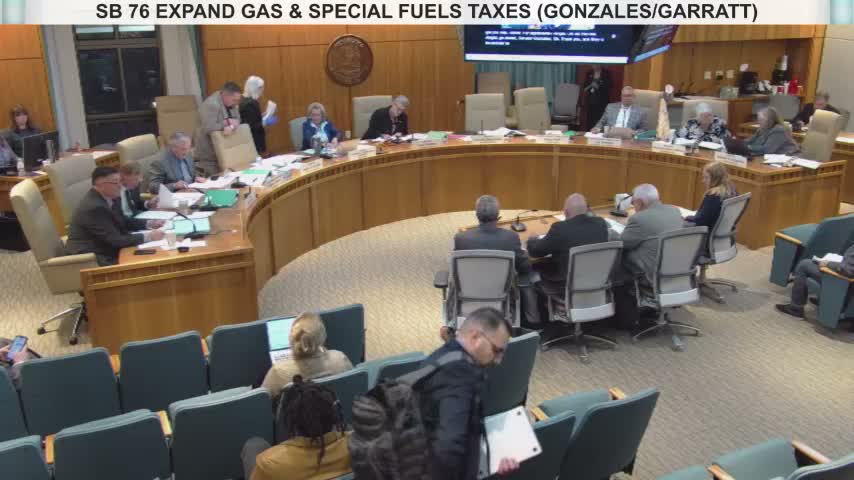
Summary
The committee recommended SB76, a proposal to raise the state gas tax from 17¢ to 23¢ per gallon (special fuel 21¢ to 26¢) effective July 1, 2026, on a 6–4 vote after extensive questioning about project backlog, distribution of revenues and interactions with other climate-related rules.
The Senate Tax, Business and Transportation Committee voted 6–4 to recommend SB76, which would increase the state gasoline tax from 17¢ to 23¢ per gallon and raise the special fuels tax from 21¢ to 26¢ per gallon effective July 1, 2026.
Sponsor testimony framed the measure as a user-fee solution to a multi-billion-dollar road maintenance shortfall. “If we don't put money into the road fund, we don't build roads,” a sponsor told the committee, citing a $7 billion estimate of unmet needs reported by witnesses. An expert witness said the increase would be dedicated to the road fund and local road fund to address maintenance and backlog projects.
Supporters — including the Asphalt Pavement Association and New Mexico Voices for Children — said the rise would restore funding parity with neighboring states and enable maintenance work. Opponents from business groups cautioned that the tax is regressive and warned of increased costs across supply chains.
Committee members pressed for a comprehensive, district-by-district plan and asked for clarity on the interaction between SB76 and pending clean transportation fuel rules. DOT representatives and an expert witness said district plans and the State Transportation Improvement Program (STIP) can be made available and that the lack of sufficient recurring revenue prevents project funding at present.
After discussion the committee recorded a 6–4 roll-call vote to recommend the bill. Sponsors and some committee members said they want follow-up work on district-level plans and clearer public accounting for how new revenue will be spent before floor action.