Get AI Briefings, Transcripts & Alerts on Local & National Government Meetings — Forever.
Senate committee tables bill to let automakers sell directly in New Mexico
Summary
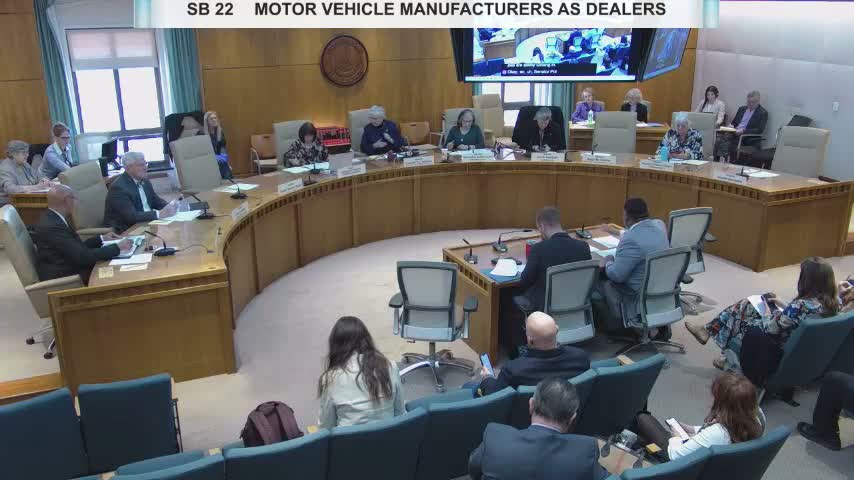
The Senate Conservation Committee tabled SB22 after hours of testimony for and against allowing certain motor vehicle manufacturers to be licensed and operate as dealers; supporters said it would expand consumer choice and EV service in‑state, while dealers warned it would harm local jobs and tribal economic arrangements.
The Senate Conservation Committee tabled Senate Bill 22, which would have revised New Mexico's motor vehicle laws to allow certain manufacturers — including some electric vehicle makers — to be licensed and operate as dealers, by a committee vote of 7 to 2.
The bill's sponsor and state officials said SB22 would let manufacturers sell and service vehicles directly in New Mexico rather than forcing consumers to go out of state or rely exclusively on independent franchise dealers. Alex Greenberg, the governor's economic development policy adviser, testified: "This bill is just allowing direct consumer sales and service stations," and said New Mexico is "1 of 4 states that don't allow that," a restriction he called a drag on EV adoption and consumer choice.
Supporters argued the change would bring investment and service centers to New Mexico. Beau Whiteman of Rivian asked lawmakers to "support the freedom for New Mexicans to choose how and where to buy their vehicles," saying Rivian wants "to invest in New Mexico, hire New Mexicans, train New Mexicans, and invest in the local community." Stephanie Chardon Clarke, secretary of the Taxation and Revenue Department, told the panel the bill would be implemented through the Motor Vehicle Division and said it would allow manufacturers to locate where economically sensible while having "the same obligations and responsibilities as independent dealers."
Opponents — led by dealer and business groups — warned of negative consequences for rural and tribal communities and for dealer‑based jobs. Bill Lee of the Greater Albuquerque Chamber said SB22 "will threaten economic lifelines, especially in rural and Native American communities," arguing local dealerships are key employers and community partners. Ken Ortiz, executive director of the New Mexico Auto Dealers Association, said his members represent about 120 franchise dealers and "are responsible for over 14,000 jobs," and noted existing pathways for manufacturers to operate in the state via partnerships with sovereign tribal entities.
Members pressed supporters and opponents on specifics. Committee members asked whether manufacturers would accept trade‑ins, how tribal tax treatment would change, and whether the bill simply accommodates manufacturers' existing business models rather than encouraging them to franchise. Taxation and Revenue Secretary Chardon Clarke said trade‑ins could be purchased and sold to third parties under the bill and explained differences in motor vehicle excise tax and gross receipts tax when sales occur on sovereign tribal land.
After extended testimony and questioning, a senator moved to table the bill. The chair announced that SB22 had been tabled by a vote of 7 to 2, halting its immediate progress out of committee. The bill may be brought back for further consideration or amendment at a later date.