
Committee backs industrial carbon-reduction incentives to attract clean manufacturing
Get AI-powered insights, summaries, and transcripts
Subscribe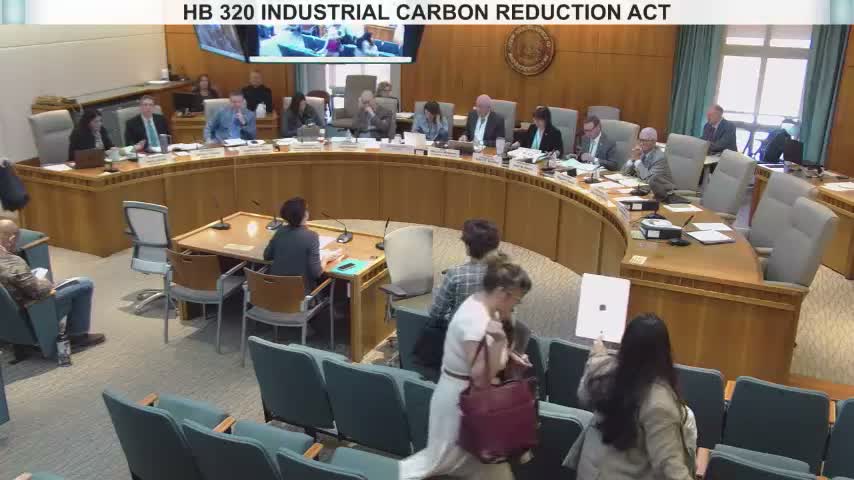
Summary
House Bill 320 would create production-based incentives and capital grants for manufacturers that produce industrial materials at least 40% cleaner than industry averages; advocates said the competitive program would spur jobs and investment while questions were raised about constitutional anti-donation limits.
Representative Dixon told the committee HB 320 creates two complementary programs: an $85-per-ton production incentive for materials that are at least 40% cleaner than the industry average, and a competitive capital grant covering 10% of qualified costs up to $5 million per project. "This bill supports decarbonizing our heavy industrial sectors while driving economic development and creating jobs here in New Mexico," the sponsor said.
Supporting testimony came from energy and business groups. Amy Barabie of New Mexico Gas Company said well‑designed incentives can protect reliability and affordability while encouraging lower carbon intensity. "Responsible reduction of the carbon intensity of energy production is possible using well designed incentives that ultimately benefit energy producers, providers, and customers," she said. Allison Riley of the New Mexico Chamber of Commerce and Matthew Stackpole of the Greater Albuquerque Chamber emphasized the bill's competitiveness and performance-based payments.
Members asked technical questions about hydrogen (the sponsor said the bill targets industrial materials, not energy generation), anti-donation constitutional risk (sponsor said clawbacks, reporting, and measurable performance conditions are intended to meet the test), and stackability with federal programs (the sponsor said the program is not stackable with Section 45Q).
The committee voted to advance HB 320 by recorded roll call; the transcript records a favorable recommendation with a 10-to-1 margin. Sponsors and advocates said the measure aims to attract investment in low-carbon materials while protecting taxpayer interests with verification and clawbacks.