Committee advances bill to boost state solar tax credit to 30%
Loading...
Summary
The House committee advanced Senate Bill 55 to increase New Mexico's rooftop solar income tax credit from 10% to 30%, raise the per-project cap and extend a sunset to 2032; sponsors and installers said the change would stabilize jobs after the end of a federal credit, while fiscal questions were discussed.
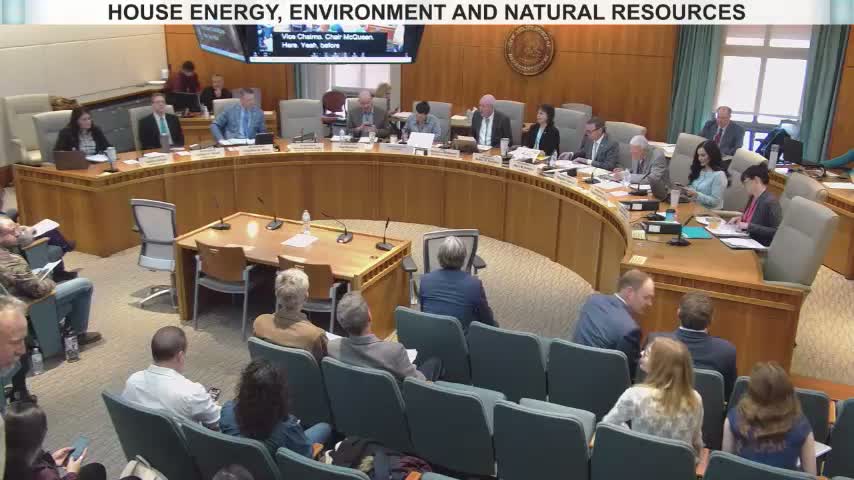
Senator Stewart told the House Energy, Environment and Natural Resources Committee on Feb. 12 that Senate Bill 55 would raise New Mexico's solar market development income tax credit from 10% to 30%, increase the per-project cap from $6,000 to $15,000 and retain the statutory annual cap of $30 million while adding a sunset in 2032. "We have lost our federal tax credit for solar," Stewart said, framing the change as a state response.
Industry witnesses described immediate economic effects. "This bill will help to stabilize the residential solar industry in New Mexico, an industry that provides approximately 2,000 jobs," said a representative of the Renewable Energy Industries Association. Miles Conway of the New Mexico Home Builders Association said electrification of new homes increases demand for distributed solar, and Randy Savick of Positive Energy said some companies have already laid off workers since the federal credit ended.
Public testimony from tribal advocates emphasized access for communities often facing higher energy costs. "SB 55 is especially important for our tribal nations because we often face some of the highest energy costs due to our limited infrastructure," Rochelle Chavez of NM Native Vote said.
Committee members asked technical and fiscal questions, including whether the credit would cover photovoltaic and thermal systems, how the state would absorb higher annual payouts, and whether new technologies (for example, plug-in balcony panels) might qualify in future. Sponsors said they expect current usage to be below the statutory cap (about $9 million per year historically) and that moving to 30% would likely increase claim amounts but remain under the cap.
After testimony and questions, a committee member moved a recommendation of 'do pass' and the committee recorded a favorable recommendation to advance the bill.
The bill now proceeds with the committee vote recorded; the next step will be floor consideration by the House.