Board approves contract to open 25‑bed reset center for people arrested for public intoxication
Loading...
Summary
The San Francisco Board of Supervisors on Feb. 10 authorized a roughly $14.5 million contract with Connections CA LLC to operate a 25‑bed “reset” center aimed at diverting people arrested for public intoxication away from jail and emergency rooms. The resolution passed 9–2 after debate over funding and whether the site constitutes involuntary detention.
The San Francisco Board of Supervisors voted 9–2 on Feb. 10 to authorize a contract with Connections CA LLC to operate a 25‑bed reset center intended as an alternative to booking people arrested for public intoxication into jail or transporting them to hospitals.
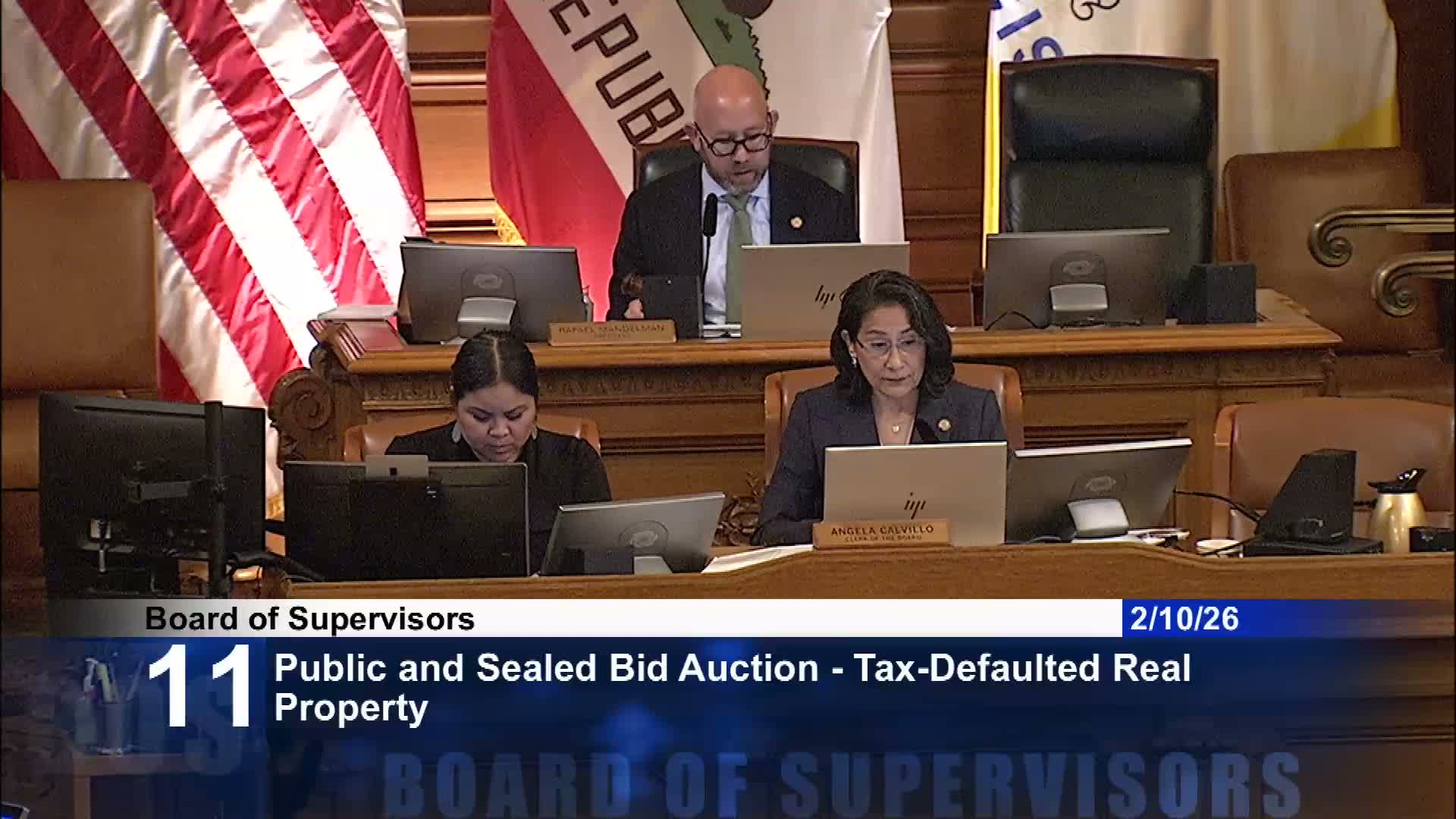
The contract—described in the agenda as a professional services agreement not to exceed approximately $14,500,000 for an initial two‑year term beginning Feb. 1, 2026—was presented by the clerk as an initiative to create a “rapid enforcement support evaluation and triage center, a safe alternative to incarceration.” The resolution authorizes the sheriff's office to contract for operations of the pilot program.
Why it matters: supporters said the pilot could reduce the time officers spend processing intoxicated people, free up patrol time and provide medically supervised space for people to sober safely. Opponents warned that the program shifts scarce public health dollars to a coercive setting overseen by law enforcement and raised legal and operational questions about whether the center is effectively a detention facility.
Supporters, led by Supervisor Shamann Dorsey, framed the center as a public‑safety and public‑health intervention for the fentanyl era. “This is the single most important drug policy innovation San Francisco has offered since the advent of the fentanyl crisis,” Dorsey said during debate, adding “I think this will work.” He described the center as a 25‑bed pilot that could reduce processing time for officers and provide “a supervised and coercive setting to hopefully make better choices.”
Opponents raised funding and standards concerns. Supervisor Joel Fielder asked the Budget and Legislative Analyst whether the multi‑year contract cost was fully budgeted; the analyst said roughly $3.1 million of the contract would not be covered in FY 2026‑27 and would likely fall to the general fund next year. Fielder said he would “not be supporting spending city funds for new sheriff facilities that come at the expense of community health programs.”
Several supervisors also pressed the sheriff and contract partners on whether the center would meet state standards for holding or treatment facilities and on the facility’s operational model. Sheriff Paul Miyamoto told the board the center is “designed as an alternative to ... jail for a health reason,” and said the Board of State and Community Corrections had evaluated the proposal and determined it is not a type‑1 holding facility, adding the facility will not have bars or locked doors and that people brought there would not be booked into jail.
On staffing and care, the sheriff’s office said the contract requires a registered nurse on site 24/7 and a team of case managers and peer specialists; the undersheriff confirmed medical oversight by the Department of Public Health and said the facility’s maximum capacity is 25 people. The sheriff’s office described a plan to triage those brought to the center, issue certificates of release when clinically appropriate, and to attempt linkages to longer‑term care when possible.
Vote and next steps: the Board approved the resolution authorizing the contract by roll call, with Supervisors Chan and Fielder voting no and the rest voting yes. Supporters said the pilot must be monitored closely and tied to budget committee review; several supervisors requested follow‑up reporting on operations and funding sources during the next budget cycle.
The resolution authorizes the contract and directs relevant departments to proceed with implementation and oversight. The pilot will begin under the terms described in the contract and be subject to subsequent budget actions for ongoing funding.