
House committee advances amended substitute for House Bill 199 to align state registry with Adam Walsh Act
Get AI-powered insights, summaries, and transcripts
Subscribe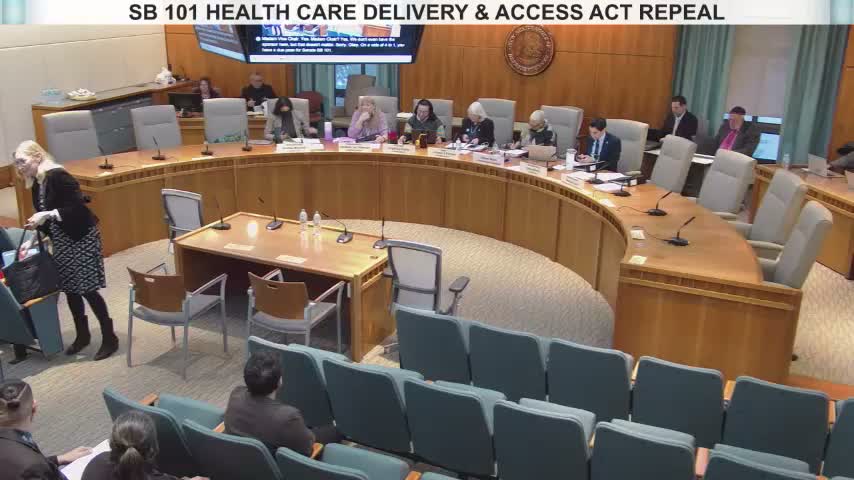
Summary
The House Judiciary Committee voted to report a committee substitute for House Bill 199, which creates a tiered offender-registration system, shortens initial reporting to three business days, requires more in-person verification and broadens certain public registry disclosures to move New Mexico closer to federal SORNA standards.
A House Judiciary Committee advanced a committee substitute for House Bill 199 after debate and amendments on definitions, reporting deadlines and public disclosure.
The substitute, presented by Department of Public Safety counsel Julie Gallardo, says its purpose is to bring New Mexico closer to compliance with the Adam Walsh Child Protection and Safety Act of 2006 and to create a tiered registration structure. "One of the biggest things" in the substitute, Gallardo said, "is we created a tier system" that generally assigns offenses to tier 1 (15-year registration), tier 2 (25-year registration) or tier 3 (lifetime registration) and aligns verification frequency with those tiers.
Supporters from public safety and business groups told the committee the changes would improve consistency and public confidence. Alex Rodriguez of the New Mexico State Police said the department supports HB199 as a means to address deficiencies in the state's current registry. Matthew Stackpole of the Albuquerque Chamber of Commerce said aligning the state's system with federal standards "improves transparency, strengthens enforcement consistency, and reduces legal uncertainty." Both speakers asked the committee to report the substitute favorably.
Opponents on Zoom and in written comments raised civil‑liberties and implementation concerns. Lloyd Swartz of the Liberty and Justice Coalition said he opposed the bill and called it "a dangerous scheme that only hurts public safety," while also acknowledging the bill had been refined and might represent a compromise.
Members pressed drafters on several details. Representative Thompson asked whether references to "3 days" meant calendar or business days; counsel confirmed the federal standard is three business days and drafters agreed to insert the word "business" where language was ambiguous. Committee members also flagged and agreed to strike a lingering, superfluous definition in one subsection to avoid statutory conflict and to standardize language replacing the word "school" with "public or private school or an institution of higher education in New Mexico." Counsel explained the substitute generally cross‑references existing criminal statutes for definitions and does not attempt to re‑define offenses in the substitute itself.
The substitute broadens what registry information may be published on the public website. Gallardo explained the substitute would allow certain employment information to be published more broadly than current practice, which now limits employment posting to registrants who work with children. One committee member warned that publishing employment information for all registrants "will make it so that everyone ... will have to report, and that basically is a job killer." DPS counsel said New Mexico has lost funding tied to noncompliance with federal SORNA standards, stating it amounted to "1,200,000.0 over the last 12 years."
On final action the committee approved a motion to "do not pass" the original House Bill 199 while reporting the committee substitute as amended with a recommendation to pass. The chair announced the committee's report as a due pass on the committee substitute and a do‑not‑pass on the original bill, by a reported margin of 5 to 1. Committee staff will incorporate agreed drafting edits (relettering and CPAP edits) before the substitute goes to the next committee or floor action.
The committee did not take up additional referrals and adjourned.