Get Full Government Meeting Transcripts, Videos, & Alerts Forever!
Nogales officials ask Arizona committee for letters of support to modernize DeConcini port of entry
Summary
Local leaders told a state committee the DeConcini port of entry is outdated, prone to monsoon flooding and long waits that harm Nogales businesses; presenters asked the committee for letters backing a federal modernization project estimated at $1.5–$2 billion.
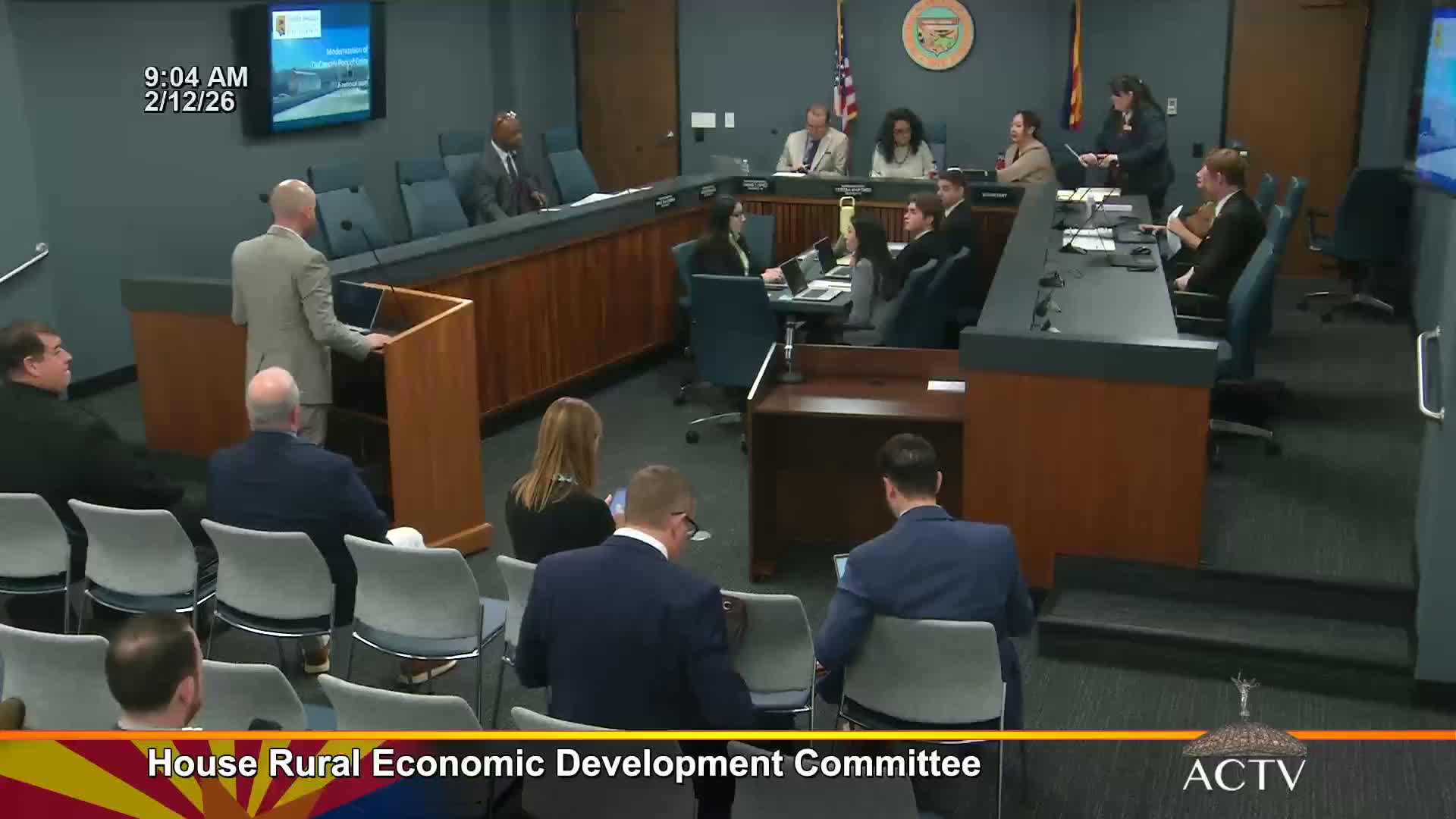
Joshua Rubin, chairman of the Greater O'Galos Santa Cruz County Port Authority, told the committee the DeConcini port of entry in Nogales urgently needs modernization to address flooding, safety and long vehicle and pedestrian wait times that harm downtown merchants and regional retail sectors. “It is essential to our downtown merchants,” Rubin said, describing infrastructure that he said “no longer meets its mission requirements.”
Supervisor John Fanning, Santa Cruz County District 3, framed the…
Already have an account? Log in
Subscribe to keep reading
Unlock the rest of this article — and every article on Citizen Portal.
- Unlimited articles
- AI-powered breakdowns of topics, speakers, decisions, and budgets
- Instant alerts when your location has a new meeting
- Follow topics and more locations
- 1,000 AI Insights / month, plus AI Chat