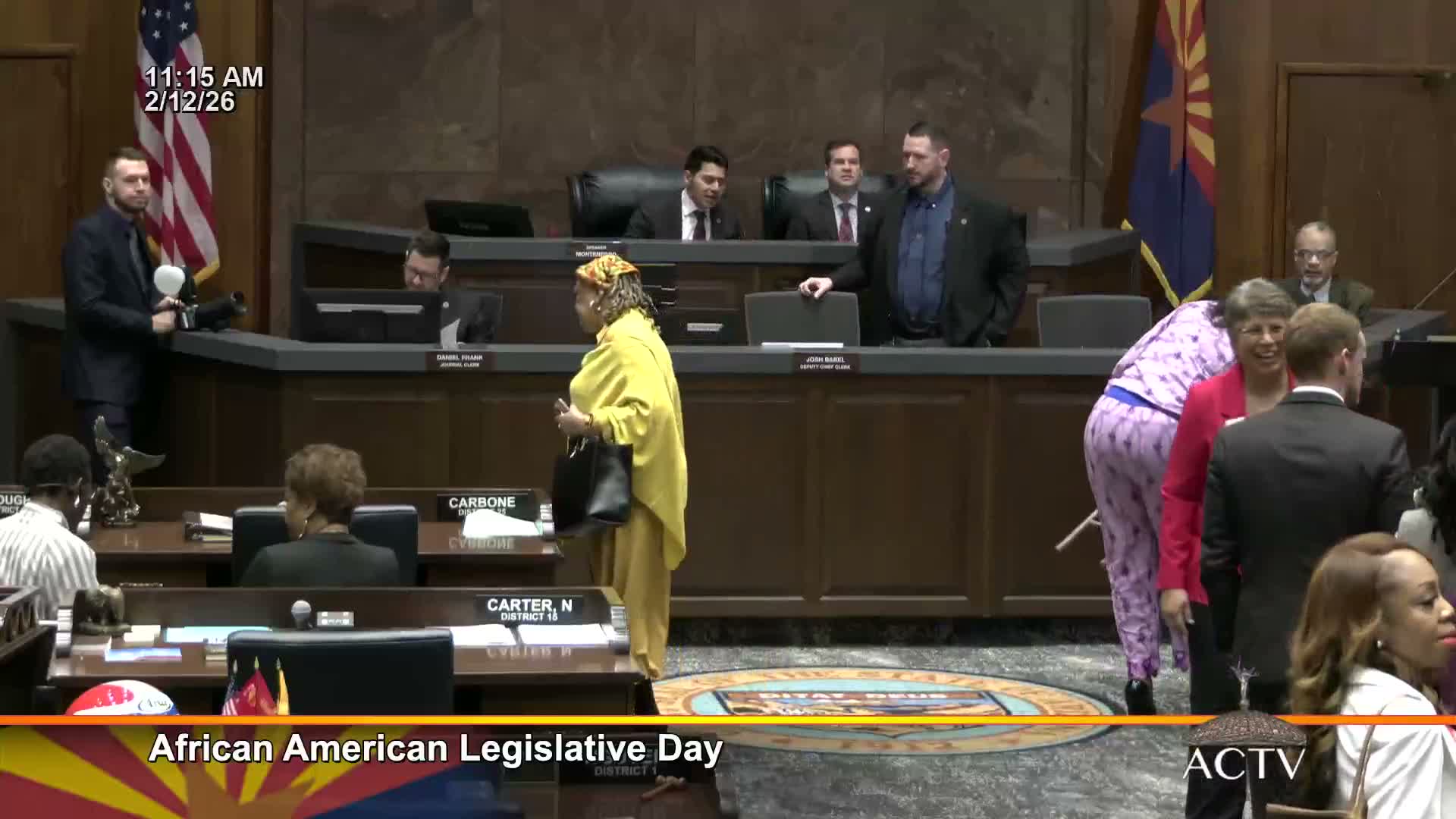
Arizona lawmakers host African American Legislative Day; Senate proclaims February 2026 Black History Month
Loading...
Summary
Legislative leaders and community representatives gathered at the Arizona Capitol for the 24th annual African American Legislative and Leadership Conference. Speakers highlighted civic engagement, called attention to housing and food-security needs, and read a Senate proclamation declaring February 2026 Black History Month.
PHOENIX — Lawmakers, community leaders and advocates convened on the House floor Friday for the joint protocol session of African American Legislative Day, where state leaders read a Senate proclamation declaring February 2026 Black History Month and called for sustained civic engagement on long-standing community concerns.
Speaker of the Arizona House Steve Montenegro opened the session, welcoming attendees and saying the majority’s agenda is focused on "preserving opportunity, promoting public safety, and protecting individual freedoms." The program included an invocation, presentation of colors by the National Association of Buffalo Soldiers and Troopers Motorcycle Club Color Guard, musical performances and a series of remarks by elected officials and representatives of the Governor’s Office of African American Affairs.
Representative Quante Cruz introduced the legislative proclamation recognizing Black History Month; the proclamation text — read as part of the program — traces the national commemoration back to 1926. In describing the proclamation, Cruz cited Senator Keanna Maria Sears, who was named in the text as Arizona state senator for Legislative District 9.
"We have the opportunity to recognize the central role of African Americans in the history of our state and our nation," the proclamation reads. Senator Keanna Maria Sears delivered remarks that tied the recognition to contemporary policy concerns, urging attendees to translate "dreams" into action, to teach children Black history and to engage in voting and civic life. Sears named ongoing challenges including food security, housing and economic disparity and encouraged community members to "stay at work and stay vigilant." (Direct quotes in this article are attributed to speakers listed in the transcript.)
Chaz Jackson, president of Buffalo Soldiers of America, Incorporated, asked the Legislature to help the organization secure a vacant building — pro bono — to house exhibits and educational materials. Jackson said the group has conducted more than 150 events and works with schools and colleges around the state.
Ashley Anderson, chair of the Governor’s Office of African American Affairs, and Jerry McPherson, the office’s executive director, urged continued partnership between community organizations and state government. McPherson described the office as "a conduit" to help community groups work with state agencies and asked legislators to use that resource.
The session was ceremonial; no motions or votes were recorded. Representative Quante Cruz closed the program with a benediction and the presiding officer formally dissolved the joint protocol session.
What’s next: The conference continues with additional programming outside the House chamber; the joint protocol session did not include formal legislative action or votes to advance bills.