
Committee approves bill to require recycling of end‑of‑life solar panels
Get AI-powered insights, summaries, and transcripts
Subscribe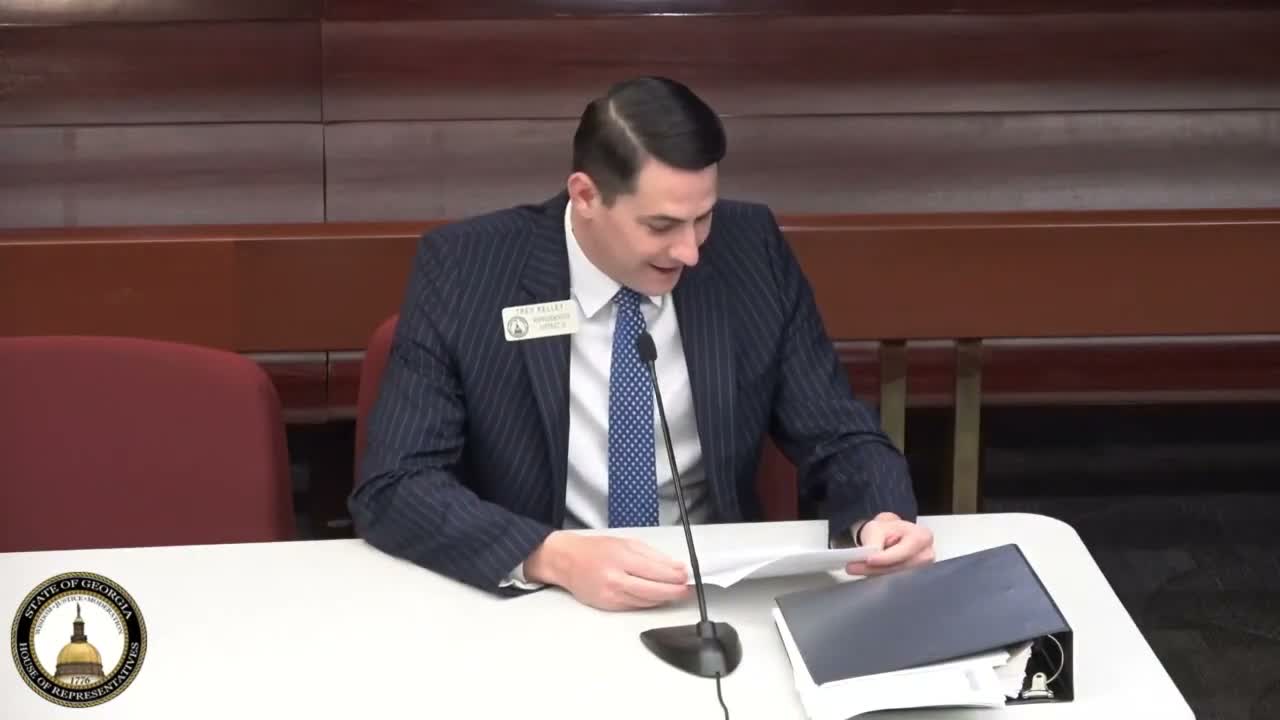
Summary
The Natural Resources & Environment committee approved a committee substitute to a House bill requiring end‑of‑life solar panels be sent to legitimate recycling facilities and to restore leased land after projects end; members removed an earlier provision for an EPD‑maintained directory.
The Natural Resources & Environment committee approved a committee substitute to a House bill that directs the disposal of solar panels at legitimate recycling facilities when the panels reach the end of their useful life and requires return of leased land to its prior condition. Representative Trey Kelly introduced the measure and said it builds on previous work to ensure leased sites are restored once leases expire.
"This is legislation that deals with the disposal, through recycling for solar panels once they reach the end of their lives," Kelly said, adding the proposal aims to make sure "our land...is returned to its natural state or the state of the landowner once the leases expire." Kelly told the committee the only substantive change from last year’s version was removal of language requiring a directory maintained by EPD, following concerns about administration and a whip’s objection.
Committee members voiced support and asked clarifying questions. One member thanked the sponsor for addressing land‑use and disposal concerns; another asked why the EPD directory language was dropped. Kelly said concerns about EPD administration and internal objections to that provision prompted its removal.
The chair called for a motion; Member 6 moved and seconded, and the committee approved the measure by voice vote. The chair characterized the result as "third time was the charm." The transcript does not record a roll‑call tally or a formal bill number for the version presented; committee members and the sponsor said the bill had previously passed through committee last year and includes a slight amendment in the present form.
Next steps: the committee approved the measure out of committee; the transcript records no subsequent floor action or additional committee directives in this session.