Get Full Government Meeting Transcripts, Videos, & Alerts Forever!
Get email alerts on the Sober Living topic
No spam. Unsubscribe anytime.
Villa Park council hears legal limits on local controls for sober‑living homes; public urges action
Summary
City Attorney Todd Litvin told the Villa Park City Council that federal and state law—citing the ADA and Fair Housing Act and recent Ninth Circuit rulings—severely limit what local governments can do about sober‑living homes; residents pressed the council for buffers, permits and state help, and the council agreed to agendize the issue next month for further discussion.
At the June 25, 2024 meeting of the Villa Park City Council, city legal staff briefed the public and council members on what local officials can and cannot do about so‑called sober‑living homes after residents raised concerns about a posted "coming soon" sign near Lincoln and Cedar Hill Circle.
Todd Litvin, the city attorney, told the council and audience that state and federal law constrain local regulation. "Addiction itself is deemed a disability under the American with Disabilities Act and the Fair Housing Act," he said, adding that under prevailing court rulings, cities generally must treat houses that shelter six or fewer people as a single‑family residence. Litvin described recent litigation and said the Ninth Circuit has held that operators need not separately prove each resident's disability for the housing to receive federal protections.
Captain Patella, speaking for the county law enforcement contract, cautioned the audience not to "blurt out answers" and urged residents to document and report problems if they occur. He told the council he had "met with people that have run these type of places, and some of them have really good intentions about helping people," and asked the public to "pump the brakes and see what this thing actually is" before assuming the worst. He also said deputies will document incidents and respond as allowed by law.
Residents pushed for stronger local tools. Dorothy Lofaro told the council she and neighbors were alarmed by the "coming soon" sign and said the proposed location is on paths children use to walk to school. "That's where children walk back and forth to school every day," she said, urging the city to pursue special permits or distance buffers.
Other commentators questioned operator qualifications and described the homes as a potential "money grab." Scott Brophy called the situation "a money grab" and asked how the city could determine whether an operator is qualified to provide services.
Council and staff repeatedly warned that many local regulatory options have been tested in court. Litvin and staff cited registration schemes, distance buffers (including a 1,000‑foot buffer that has been litigated elsewhere), and conditional use permit approaches used by other Orange County cities; they also noted that some local efforts have prompted expensive litigation. The council and staff discussed two possible avenues: continued litigation in federal courts (potentially up to the U.S. Supreme Court) or state legislative action to give cities clearer authority.
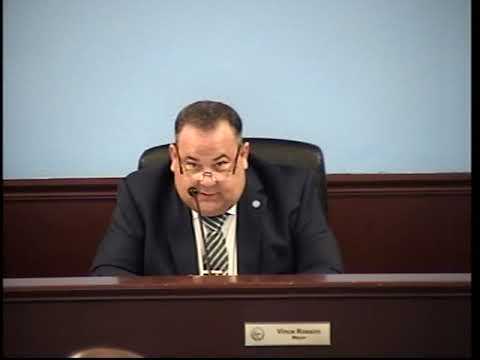
Mayor Rossini said the issue is important to residents but cautioned against precipitate legal action that could expose the city to large litigation costs. The council did not adopt an ordinance or regulation at the meeting. Instead, after hearing public comment, Mayor Rossini said the council would "agendize this for next month's meeting to further the dialogue on this matter," giving residents an opportunity to present ideas and staff time to prepare options.
The council and staff encouraged residents to report property‑specific problems—noise, maintenance or other municipal code violations—because those can be enforced the same as any other residence. They also advised residents to contact state regulators if they suspect on‑site medical services or controlled substances are involved, because those issues may trigger state licensure and oversight.
The council plans a more extensive, agendized discussion next month in which staff and city attorney Litvin said they will present potential ordinance language and legal options for consideration. No formal vote on a local regulatory measure occurred at the June 25 meeting.