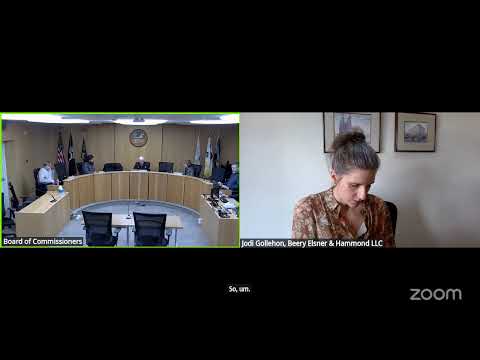
Yamhill County delays decision on land‑use appeal by Alahe Indigenous Center after full hearing
Loading...
Summary
After hours of testimony from the Woodleys, more than a dozen faith leaders and extensive staff analysis, the Yamhill County Board of Commissioners closed the public hearing on an appeal of conditions attached to an agritourism permit and postponed deliberations to March 12 to allow staff and the applicant to consider re‑filing as a church use or negotiate modified conditions.
The Yamhill County Board of Commissioners on Feb. 12 closed a public hearing and set deliberations for March 12 on an appeal by Randy and Edith Woodley of permit conditions tied to their agritourism approval for the Alahe Indigenous Center on a 9.4‑acre EF‑40 parcel.
The Woodleys and their attorney argued that several standard conditions — a cap of 24 attendees, limiting events to six per year, restricting overnight camping to a single annual event, and prohibitions on serving self‑grown food — impose a "substantial burden" on their land‑based religious practices and must be reviewed under the federal Religious Land Use and Institutionalized Persons Act. Applicant Randy Woodley told commissioners: "Let us have friends over. Let us teach them. Let us feed them the food we grow. Let them camp overnight when needed." He said limiting overnight gatherings and attendance would make their ministry effectively impossible.
County planning staff recounted the application history and the safety and zoning constraints that shaped the decision. The planner noted the parcel is zoned Exclusive Farm Use (EF‑40), described on‑site structures and temporary facilities, and outlined building, septic, fire‑access, and public‑health requirements that are not automatically waived by federal religious‑use law. Staff described social media posts and a PG&E grant application that referenced "ongoing schools" and a learning center, which prompted concern that the existing agricultural‑use filing did not fully describe planned activities. Planning staff said they approved a revised request for six events with standard conditions and recommended that, if the board allows on‑site camping for up to six events, approval should be conditioned by 13 stipulations modified to address fire and hours concerns. "I stopped the issuance of the solar permit until we had received a land use application for the use," staff said, describing the office's effort to ensure appropriate land‑use review.
Appellant counsel Mick Harris urged a strict, fact‑specific review under the federal statute and asked the board to consider whether the county had used the least restrictive means to address public‑safety interests. Harris said the record shows the Woodleys' religious practices are sincere and that the county should apply a RLUIPA analysis to each challenged condition.
Dozens of clergy, faith leaders, longtime volunteers and neighbors spoke in support of the Woodleys during the hearing, describing the program's educational, spiritual and community benefits and urging accommodation for indigenous, land‑based worship that does not fit conventional building‑based definitions of church use.
County counsel and planning staff told the board that a church/religious‑use application is a different procedural path that would require separate noticing and a different factual analysis than an agritourism permit. The board discussed three main options: (1) amend the existing decision and approve the six‑event permit with modified conditions; (2) remand or pause and allow the applicant to withdraw and reapply as a church (type B review under county code); or (3) deny and permit the applicant to appeal to LUBA. Commissioners and staff agreed to give the parties time to explore those options.
Rather than rule immediately, the board closed the hearing at 12:43 p.m. and delayed deliberations to March 12 to allow the applicant to work with county counsel and planning staff on whether to proceed as a church application, withdraw and refile, or accept modified agritourism conditions. The board took no final action on the appeal that day.
The case centers on how the county balances farm‑zone protections and public‑safety requirements with constitutional protections for religious exercise. Planning staff referenced ORS 215.296 (farm impacts test) and federal guidance noting that public‑health and safety codes (septic, building inspections, food‑service rules) are generally not waived by federal religious‑use law. The applicant said they will pursue administrative and, if necessary, judicial remedies if they cannot reach a negotiated resolution.
The board set a limited‑purpose date to resume deliberations on March 12; staff offered to assist the applicant and county counsel with any re‑filing or renoticing required by a change in application type.